What Is a Steerable Knee Scooter Really?
On this page (10 sections)
- Understanding the Steerable Knee Scooter Design
- How It Actually Works: The Mechanics in Simple Terms
- Key Benefits: Why People Choose This Over Crutches
- Who Is This Device Typically For?
- Comparing Steerable Models: What to Look For
- Safety First: Essential Use Guidelines
- Making the Most of Your Rental or Purchase
- A Quick Checklist Before You Start
- Conclusion
- Frequently Asked Questions
Understanding the Steerable Knee Scooter Design
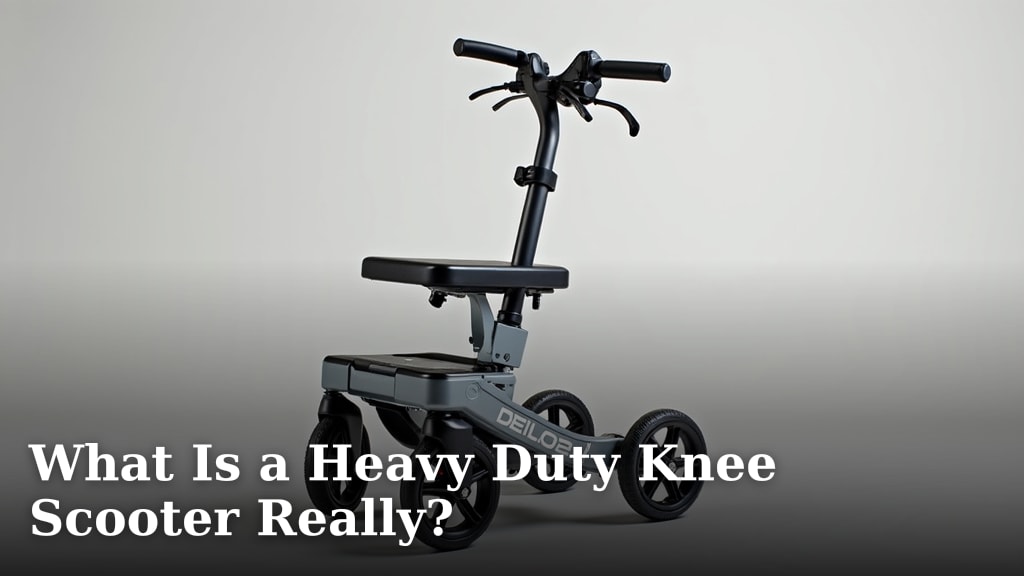
A manual knee scooter is a mobility aid that lets you move around while keeping all weight off an injured leg or foot. You rest your knee on a padded platform, push with your good leg, and use handlebars to steer. It’s designed to be a more stable, maneuverable, and comfortable alternative to crutches or a standard walker.
How It Actually Works: The Mechanics in Simple Terms
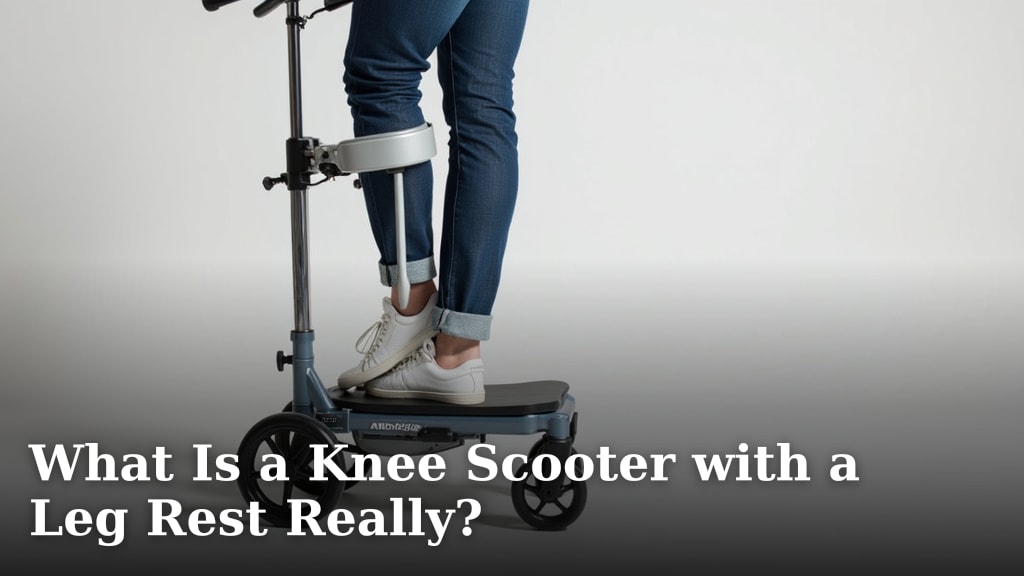
At its core, this device replaces your need to hop on one foot or strain your arms. The central idea is straightforward. You place your injured leg on the knee pad, bend it at the knee, and keep your foot safely elevated. Your good leg does all the work, providing the forward push. This simple shift prevents fatigue and reduces the risk of falls.
The Steering Mechanism Explained
The “steerable” part is what sets this apart from basic knee walkers. Most models have a front wheel that can turn left or right. You control this by turning the handlebars, much like you would on a bicycle. This allows you to navigate around corners, furniture, and through doorways with ease. We found that this direct control significantly boosts user confidence and independence.
How the Turning System Works
The handlebars are connected to the front fork and wheel by a simple pivot or steering column. For a closer look, see our guide to non-weight-bearing knee scooters. When you turn the handlebars, the entire front wheel assembly rotates. This action guides the scooter in your desired direction. It’s an intuitive system that most people pick up on within minutes of practice. For a detailed look at each part, our guide to knee scooter components is a helpful next step.
Propulsion and Braking Systems
Moving forward is all about your “engine”—your good leg. You simply push off the ground. For stopping, you have two systems working together. First, most scooters have hand-operated brake levers, just like a bicycle, which squeeze the wheels to slow down. Second, there is often a rear wheel lock or parking brake you can engage when you need to stand still safely. Many health professionals recommend always using the parking brake when stationary to prevent rolling.
Key Benefits: Why People Choose This Over Crutches
Recovery from a foot, ankle, or lower leg injury can be a long road. Choosing the right mobility aid makes a huge difference in your quality of life during that time. Based on our research and user feedback, here are the most cited advantages.
- Greater Stability: Four wheels create a wide, stable base. This lowers the chance of tipping over compared to crutches.
- Less Physical Strain: It saves your arms, shoulders, and armpits from the soreness and nerve compression often caused by crutches.
- More Energy Conservation: Moving around requires less overall energy, letting you focus that energy on healing.
- Enhanced Maneuverability: The steering function lets you navigate your home, office, or store aisles much more easily.
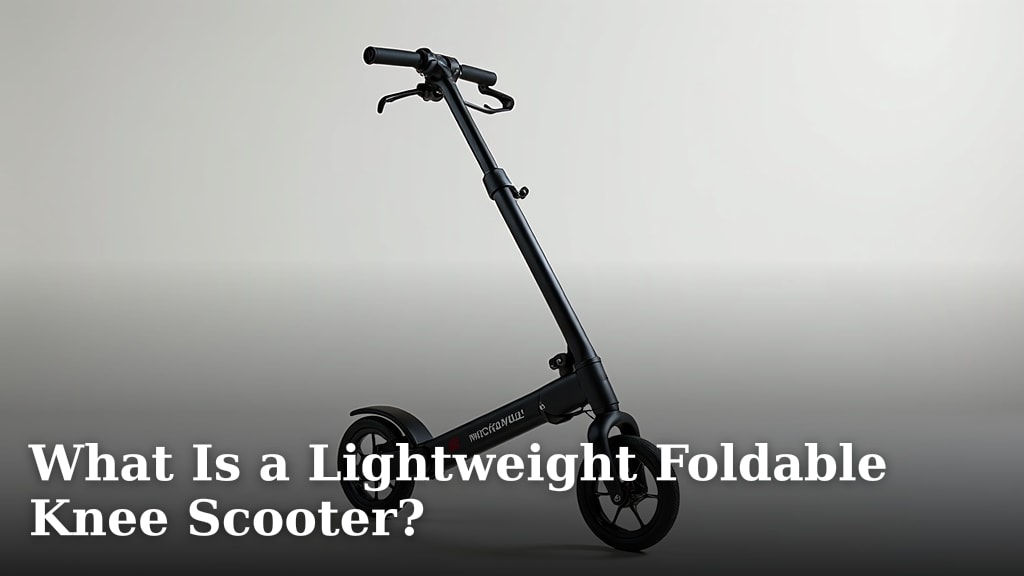
- Convenient Storage: Most models fold down, making them easy to store in a car trunk or closet when not in use.
Who Is This Device Typically For?
Steerable knee scooters are generally recommended for individuals recovering from injuries or surgeries below the knee. This includes foot fractures, ankle sprisms, Achilles tendon repairs, or certain knee surgeries. They are an excellent solution for anyone who needs to stay off a foot but must remain mobile for work or daily life.
However, it’s not a one-size-fits-all solution. A doctor or physical therapist must determine if it’s safe and appropriate for your specific condition. Factors like balance, strength, and the exact nature of your injury play a big role in this decision.
When a Steerable Scooter Might Not Be the Best Fit
Certain conditions make using a knee scooter challenging or unsafe. These include significant knee pain or limitations on the injured side, severe balance disorders, or upper body weakness that makes controlling the handlebars difficult. For injuries above the knee, or for individuals who cannot safely bend the knee to a 90-degree angle, other aids like a seated scooter or crutches are usually better options.
Comparing Steerable Models: What to Look For
Not all steerable knee scooters are built the same. When you’re shopping, pay attention to these critical features to ensure you get a quality, safe device that fits your needs.
| Feature | Why It Matters | What to Check |
|---|---|---|
| Weight Capacity | Ensures the scooter can safely support you. | Look for a capacity that exceeds your body weight by at least 20-30 pounds. |
| Knee Pad & Height Adjustability | Proper fit is essential for comfort and safety. | The pad should support your entire shin, and the height must allow a slight bend in your knee when your good foot is flat on the floor. |
| Wheel Quality | Affects smoothness of ride on different surfaces. | Non-marking, solid rubber tires (8″ or larger) are best for both indoor and outdoor use. Avoid small, hard plastic wheels. |
| Braking System | Your primary safety control. | Dual hand brakes are ideal. Ensure they are responsive and easy to squeeze. |
| Folding Mechanism | Determines ease of transport and storage. | Check if it folds quickly and if the folded dimensions will fit in your car trunk or storage space. |

Safety First: Essential Use Guidelines
Your safety while using a steerable knee scooter is the top priority. Following a few simple guidelines can prevent accidents. Always start in a clear, open area to practice steering and braking. Make sure your injured leg is securely and comfortably positioned on the pad before you start moving.
Be mindful of your surroundings. For a closer look, see our guide to knee scooter brakes. Watch for loose rugs, cords, and wet floors. When going up or down ramps, proceed very slowly and have someone spot you if possible. It’s also wise to avoid using stairs altogether. Always engage the parking brake completely when you are not moving, even for a moment.
Preparing Your Home for a Knee Scooter
A little preparation goes a long way. Create clear, wide pathways by moving furniture or clutter. Ensure all rugs are secured or removed to prevent slipping. Consider using a backpack or a basket attached to the handlebars to carry items so your hands remain free for steering and braking. This small step prevents the temptation to try and carry things, which can compromise your stability.
Making the Most of Your Rental or Purchase
Whether you rent or buy, getting accustomed to your scooter takes a bit of time. We recommend practicing on a flat, smooth surface for at least 15-20 minutes before using it for a longer trip. This builds muscle memory for steering and stopping. It also helps you get a feel for the device’s width and how it moves.
Maintenance and Care Tips
Keep your scooter in good working order with minimal effort. For a closer look, see our guide to knee scooters for tall people. Regularly check that the wheels are tight and roll smoothly. Inspect the brake levers to ensure they have firm tension. The knee pad and handlebar grips should be wiped down with a disinfectant regularly, especially if used frequently. If you rent a scooter, the rental company typically handles any needed maintenance.
A Quick Checklist Before You Start
Use this simple checklist to ensure you’re ready for a safe and smooth recovery journey with your steerable knee scooter.
- Doctor’s Approval: Confirmed with your healthcare provider that a knee scooter is safe for your injury.
- Proper Fit: Adjusted knee pad height so your knee has a slight bend; handlebars are at a comfortable waist height.
- Space Checked: Cleared pathways at home and confirmed it fits in your vehicle.
- Brakes Tested: Practiced using both hand brakes and the parking brake to stop firmly.
- Carrying Solution: Have a bag or basket ready to carry personal items hands-free.
- Practice Time: Set aside time to practice in a safe, open area before your first big outing.
Conclusion
A steerable knee scooter provides a stable, comfortable alternative to crutches for recovering from lower leg injuries. It lets you move easily with less strain, thanks to its steering and braking systems. Remember to choose a model that fits your needs, practice safely, and always get your doctor’s approval. Your next step should be to talk to your healthcare provider and test the scooter in a safe, open space to ensure it works for you.
Frequently Asked Questions
How long does it take to get used to a steerable knee scooter?
Most people feel comfortable with the steering and braking within a few minutes to an hour of practice. Start in a clear, open area to build your confidence quickly. With a little time, you’ll find it easy to navigate your surroundings.
Can I use a steerable knee scooter on stairs?
No, it is not safe to use a knee scooter on stairs. The device is designed for flat surfaces and can be unstable on steps. Always avoid stairs and use an elevator or ask for help if needed.
Are steerable knee scooters covered by insurance?
Insurance coverage varies, so check with your provider. Some plans may cover it if prescribed by a doctor for a medical condition. Ask your insurance company and healthcare provider about coverage options to be sure.
What’s the difference between a steerable knee scooter and a regular knee walker?
A steerable knee scooter has handlebars and a front wheel that can turn for better maneuverability. A regular knee walker might have a fixed front or limited steering. This makes the steerable version more flexible for navigating tight spaces.
How do I know if a steerable knee scooter is the right size for me?
Check the weight capacity and adjust the knee pad height so your knee bends slightly. The handlebars should be at a comfortable height for your waist. If unsure, consult with a physical therapist or the scooter’s seller for scooter fitting advice.