What Really Makes a Knee Scooter All Terrain?
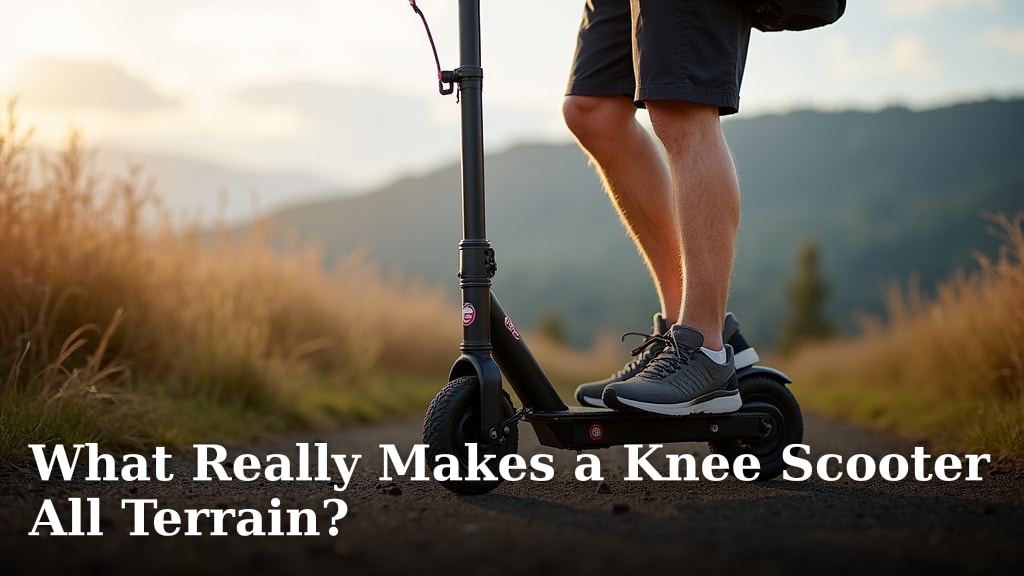
What really makes a knee scooter all-terrain is its larger wheels and sturdier build. You’re looking for a scooter designed to handle more than just smooth, flat sidewalks. These features allow it to navigate bumps, gravel, grass, and uneven surfaces more easily than standard models. If you need to get around rougher ground, this is what you need to focus on.
When we talk about all-terrain knee scooters, we’re not talking about conquering mountains. We’re talking about giving you more freedom to move around your yard, local park, or a slightly bumpy path. It’s about having a mobility aid that doesn’t get stuck easily when you leave the pavement. Think of it as a step up from your average mobility device.
- Look for bigger wheels (typically 10-12 inches).
- Check for a robust frame built for tougher surfaces.
- Consider suspension systems for a smoother ride.
- Understand that “all-terrain” has its limits.
Let’s break down what features make a knee scooter truly capable of handling different terrains, so you can choose the right one for your needs.
What Actually Makes a Knee Scooter Ready for Rougher Ground
When you’re recovering from an injury, you want to keep moving. Standard knee scooters are great for smooth surfaces. But what if your path isn’t always pavement? We found that a knee scooter’s ability to handle uneven terrain comes down to a few key design choices. It’s not magic; it’s smart engineering.
The main difference is usually in the wheels and the frame. These are the parts that make contact with the ground and bear your weight. Bigger wheels roll over obstacles better. A stronger frame can handle more stress. Let’s look at what makes a scooter truly “all-terrain.”
The Importance of Wheel Size and Type
You’ve probably noticed that most knee scooters have small wheels, often around 8 inches. These are perfect for indoor use or paved paths. But for anything rougher, you need bigger wheels. We found that 10 to 12-inch wheels are the sweet spot for off-pavement performance.
Why Bigger Wheels Matter
Think about trying to roll a toy car over pebbles versus a large bicycle tire over the same pebbles. The bigger tire handles the bumps much more easily. This is because larger wheels have a greater angle of attack. They can simply roll up and over obstructions instead of getting stuck. Many experts agree that wheel diameter is a primary factor in mobility device capability over varied surfaces (National Institutes of Health).
Larger wheels also offer a smoother ride. They absorb more of the shock from bumps and cracks. This means less jarring for your injured leg and your whole body. You’ll feel less vibration traveling up the scooter and into your hands.
Considering Wheel Material and Tread
It’s not just the size that counts. The material and tread pattern of the wheels are also important. Most standard scooters use hard rubber or plastic wheels. These can be slippery on loose surfaces like gravel or wet grass.
For all-terrain capability, look for wheels made from softer, more durable rubber compounds. These offer better traction. A more aggressive tread pattern, similar to what you might see on a bike tire, can also help grip loose surfaces. We found that air-filled tires can provide superior shock absorption compared to solid tires. However, they do require occasional inflation and are more prone to flats if you hit sharp objects.
Solid tires, on the other hand, don’t require maintenance and can’t go flat. But they often provide a harsher ride and less grip on uneven surfaces. The trade-off is often between maintenance-free durability and ride comfort/traction.
Frame Strength and Design for Durability
Beyond the wheels, the scooter’s frame needs to be robust enough to handle the extra stress of uneven terrain. A flimsy frame can bend or break when encountering significant bumps or inclines.
Material Matters: Steel vs. Aluminum
Many knee scooters are made from aluminum, which is lightweight and corrosion-resistant. This is great for portability and indoor use. However, for an all-terrain model, a stronger steel frame might be a better choice. Steel is generally more durable and can withstand greater forces. While heavier, its resilience is often worth the extra weight for outdoor use.
When looking at frames, check the thickness of the tubing and the quality of the welds. You want to see solid construction that looks like it can take a beating. We found that manufacturers specifically designing for tougher use often reinforce key stress points on the frame.
Suspension Systems for a Better Ride
Some high-end all-terrain knee scooters incorporate suspension systems. This is much like what you find on a mountain bike. These systems work to absorb shocks and vibrations before they reach the rider.
A suspension can dramatically improve your comfort when going over bumps, roots, or uneven ground. It helps keep the wheels in contact with the surface, improving control. While not essential for all users, if you plan to spend a lot of time on rough trails, suspension is a feature worth considering. Many product reviews indicate that suspension significantly reduces fatigue on longer journeys over varied terrain.
Understanding the Limits of “All-Terrain”
It’s important to have realistic expectations. An “all-terrain” knee scooter is not an all-terrain vehicle. It’s designed to give you more options, not to conquer extreme environments.
What “All-Terrain” Usually Means
When a knee scooter is marketed as all-terrain, it typically means it can handle surfaces like:
- Gravel paths
- Packed dirt trails
- Short grass
- Slightly uneven sidewalks
- Small cracks and bumps
When to Be Cautious or Choose Another Option
Even the best all-terrain knee scooters will struggle with:
- Deep sand
- Thick mud
- Very rocky or root-filled trails
- Steep, loose inclines
- Snow or ice
Always assess the terrain before you attempt to navigate it. If you’re unsure, it’s safer to walk or seek assistance. Many safety guidelines for mobility devices advise users to remain on predictable surfaces (Consumer Product Safety Commission).
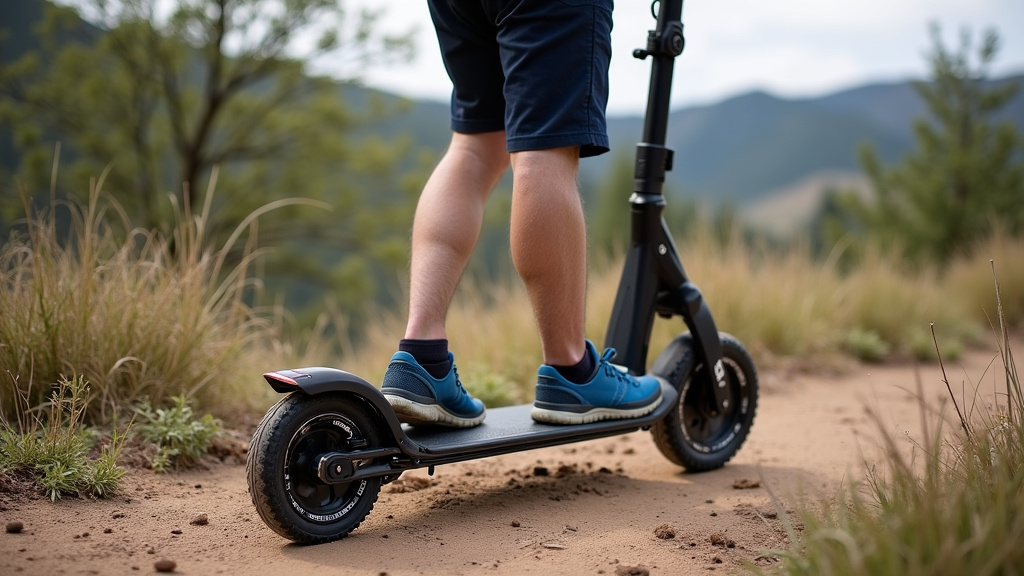
Comparing Standard vs. All-Terrain Knee Scooters
To help you visualize the differences, let’s break them down into a simple comparison.
| Feature | Standard Knee Scooter | All-Terrain Knee Scooter |
|---|---|---|
| Wheel Size | 6-8 inches | 10-12 inches |
| Wheel Material | Hard rubber/plastic | Softer rubber, sometimes air-filled |
| Tread Pattern | Smooth or light tread | Deeper, more aggressive tread |
| Frame Material | Often aluminum | Often reinforced aluminum or steel |
| Suspension | Rarely included | May have front or full suspension |
| Intended Use | Smooth, indoor/outdoor surfaces | Varied surfaces including gravel, dirt, grass |
| Ride Comfort on Rough Surfaces | Low | Medium to High |
Your Checklist for Choosing an All-Terrain Knee Scooter
Ready to find the right scooter for your needs? Here’s a quick checklist to keep in mind:
- Wheel Diameter: Aim for 10 inches or larger.
- Wheel Type: Prefer softer, grippier rubber with good tread.
- Frame Construction: Look for sturdy materials and solid welds.
- Suspension: Consider this for maximum comfort on rougher paths.
- Weight Capacity: Ensure it meets your needs and is built for durability.
- Your Typical Path: Honestly assess where you’ll be using it most.
Conclusion
Choosing an all-terrain knee scooter means focusing on its ability to handle more than just smooth surfaces. You’ve learned that larger wheels (10-12 inches) and a sturdier frame are the most critical features for tackling gravel, dirt, and grass. Don’t forget to consider wheel material, tread, and even suspension for a more comfortable ride. While these scooters offer greater freedom, always remember their limitations and assess the terrain before you go. Your next step is to review the checklist we provided and start looking for models that best match your specific needs and the places you plan to travel.
Frequently Asked Questions
Can an all-terrain knee scooter go on grass?
Yes, an all-terrain knee scooter is designed to handle short grass better than a standard model. Its larger wheels and better traction help it roll over the uneven surface. However, very thick or wet grass can still be challenging, so proceed with caution.
Are all-terrain knee scooters harder to steer?
Generally, they are not harder to steer, but you might feel a slight difference due to the larger wheels. The improved traction and ability to roll over obstacles can actually make steering feel more controlled on varied terrain. You’ll want to maintain a firm grip on the handlebars.
Do air-filled tires on all-terrain scooters pop easily?
Air-filled tires offer a smoother ride and better shock absorption, but they can pop if you hit sharp objects, much like a bike tire. Solid tires on some all-terrain models eliminate this risk but may provide a less comfortable experience. It’s a trade-off to consider based on your typical paths.
Is suspension really necessary on an all-terrain knee scooter?
Suspension is not strictly necessary but greatly enhances comfort, especially if you’ll be using your scooter on rougher paths frequently. It absorbs bumps and vibrations, reducing fatigue and making your ride much smoother. Many users find it a worthwhile upgrade for better mobility.
How do I know if my path is too rough for an all-terrain knee scooter?
If a path looks very rocky, muddy, has large roots, or is covered in deep sand, it’s likely too challenging. Steep, loose inclines are also difficult. It’s always best to err on the side of caution and if you doubt your ability to navigate a surface safely, choose a different route or ask for assistance.