What Is the Medical Name for a Knee Scooter?

The medical name for a knee scooter is a “knee walker”. While commonly called a knee scooter, this mobility aid is officially recognized in medical settings as a knee walker. It’s designed to help you move around when you can’t put weight on your foot or ankle, offering a stable alternative to crutches.
You might be wondering about the exact terminology because you’ve heard it called by different names. Medical professionals and equipment suppliers typically use “knee walker”. This term accurately describes how the device works, supporting your knee while you propel yourself forward. It’s a simple yet effective tool for recovery after injuries or surgery, often leading to faster mobility.
- The medical term is “knee walker.”
- “Knee scooter” is the common name.
- It helps you move when you can’t use your foot.
- It’s an alternative to crutches.
We found that understanding the correct term can be helpful when discussing your needs with doctors or ordering equipment. Below, we’ll break down exactly what a knee walker is and how it can help you navigate your recovery period.
Understanding Your Mobility Aid: The Knee Walker
So, you’ve heard the term “knee scooter” and are now wondering what the official medical name is. You’re not alone! Many people use “knee scooter” casually. However, in medical circles and when you’re ordering the device, the correct term is “knee walker”. This might seem like a small detail, but using the right terminology can make a big difference when talking with your doctor, physical therapist, or equipment provider. We found that accuracy helps ensure you get the right equipment for your recovery needs.
Think of it like this: you might call your car a “car,” but its official model name might be a “sedan” or an “SUV.” Similarly, “knee walker” is the more descriptive and officially recognized term for this helpful mobility device. It clearly states its function: it’s a walker that supports your knee. We’ll use “knee walker” throughout this guide to keep things clear and medically accurate, but remember that “knee scooter” is what most people say.
What Exactly Is a Knee Walker?
A knee walker is a mobility device designed for individuals who cannot bear weight on one of their legs. This often happens after injuries to the foot, ankle, or lower leg, or following surgery in these areas. It’s basically a rolling device with a platform where you can rest your injured leg. You then use your good leg to propel yourself forward. It’s a step up from crutches for many people. Many sources suggest it can help you maintain a more The steerable knee scooter replaces your need to hop on one foot or strain your arms.active lifestyle during your recovery period.
Key Components of a Knee Walker
Let’s break down what makes up a knee walker. Understanding its parts can help you appreciate how it works and what to look for if you need one.
The Steering Column and Handlebars
Similar to a bicycle or scooter, a knee walker has a steering column. This allows you to change direction. The handlebars at the top are where you’ll hold on for stability and to steer. Good handlebars are ergonomically designed and often come with padded grips for comfort during longer periods of use. We found that adjustable handlebars are a big plus for users of different heights.
The Knee Pad
This is the core feature! The knee pad is a padded platform where you place your injured leg. It’s usually contoured to fit the shape of your shin and knee comfortably. You want a pad that is thick and supportive. It should keep your leg elevated and secure without causing pressure points. Some knee pads are adjustable in height, which is important for proper leg positioning.
The Wheels and Frame
Knee walkers have wheels, typically two or three, designed for smooth rolling. They allow you to glide effortlessly over surfaces. The frame connects all the parts and needs to be sturdy and durable. Most frames are made from metal, like steel or aluminum, for strength. We found that larger wheels generally offer a smoother ride, especially over slightly uneven surfaces.
Braking System
Safety first, right? Most knee walkers come equipped with a braking system. This is usually a hand-operated brake, similar to those on a bicycle. You squeeze the levers to slow down or stop. It’s essential to understand how the brakes work on your specific model. This feature is critical for safe navigation and preventing accidents.
How Does a Knee Walker Differ from Crutches?
This is a question we hear a lot. While both crutches and knee walkers help you move when you can’t use your foot, they offer very different experiences. Crutches require you to use your upper body strength extensively. You have to balance on three points of contact (two crutches and your good foot). This can be tiring and puts a lot of stress on your shoulders and wrists.
A knee walker, on the other hand, supports your injured leg entirely on the padded platform. You use your good leg to push off the ground. This significantly reduces the strain on your upper body. We found that many users report less fatigue and a greater sense of independence with a knee walker compared to crutches. It also allows you to keep your hands free more often, which is a big deal.
Consider the simple act of carrying something. With crutches, it’s almost impossible to carry a cup of coffee or a small bag. With a knee walker, you can often manage these tasks with relative ease, as your hands are free to hold items. This can make everyday activities much more manageable during your recovery.
When is a Knee Walker the Right Choice for You?
So, when should you consider opting for a knee walker? The primary reason is when you’ve been advised by a medical professional to avoid putting weight on your affected leg. This typically applies to conditions such as:
- Foot injuries: Fractures, sprains, plantar fasciitis flare-ups.
- Ankle injuries: Sprains, fractures, Achilles tendon issues.
- Lower leg injuries: Fractures of the tibia or fibula.
- Post-surgery recovery: After procedures on the foot, ankle, or lower leg.
- Certain medical conditions: Such as Charcot foot or severe ulcers that require offloading.
Your doctor or physical therapist is the best person to advise you on whether a knee walker is appropriate for your specific situation. They can assess your injury and your overall physical condition. They will help you determine if you have the strength and balance needed to safely operate a knee walker. For example, if you have balance issues or significant weakness in your other leg, crutches might be a safer initial option.
Benefits of Using a Knee Walker
We’ve touched on some of these, but let’s make them clear. Knee walkers offer several advantages that can significantly improve your recovery experience.
Increased Mobility and Independence
This is perhaps the biggest benefit. A knee walker allows you to move around your home and potentially outdoors more freely than crutches. You don’t have to constantly hop or navigate awkward movements. This ability to move independently can have a huge positive impact on your mental well-being during what can be a frustrating time.
Reduced Physical Strain
As mentioned, it takes the pressure off your injured leg and reduces the strain on your arms, shoulders, and back. This means you’re less likely to develop secondary aches and pains that often come with prolonged crutch use. Many studies and patient accounts suggest a lower risk of developing carpal tunnel syndrome or rotator cuff issues when using a knee walker versus crutches (NCBI).
Improved Posture and Gait
Unlike crutches, which can encourage slouching and an unnatural gait, knee walkers allow for a more upright posture. This can help prevent long-term back problems. While you’re not walking normally, the upright positioning is generally considered better for your spine. It’s about maintaining as much normalcy as possible.
Hands-Free Convenience
The ability to keep one hand free is incredibly convenient. You can open doors, carry a phone, or even prepare simple meals. This small freedom can make a big difference in your daily life. It feels less like being completely incapacitated.
Potential for Faster Recovery
By allowing for more movement and reducing strain, some users report feeling more active and less stagnant during their recovery. While the device itself doesn’t heal the injury, maintaining a degree of mobility can be beneficial for circulation and overall health. This can contribute to a smoother recovery process. It’s about staying active within your limits.
Choosing the Right Knee Walker: A Quick Checklist
If you’ve decided a knee walker is for you, or you’re considering it, here’s a quick way to think about what makes a good one.
- Is it adjustable? Check the height of the handlebars and the knee pad.
- Does it have good brakes? Ensure they are easy to operate and reliable.
- Are the wheels suitable? Larger wheels tend to handle different surfaces better.
- Is the knee pad comfortable? It should be well-padded and supportive.
- What’s the weight capacity? Make sure it can safely support your weight.
- Is it easy to fold or transport? If you need to put it in a car.
We found that taking a moment to consider these features can help you select a knee walker that truly supports your recovery journey. It’s an investment in your comfort and mobility.
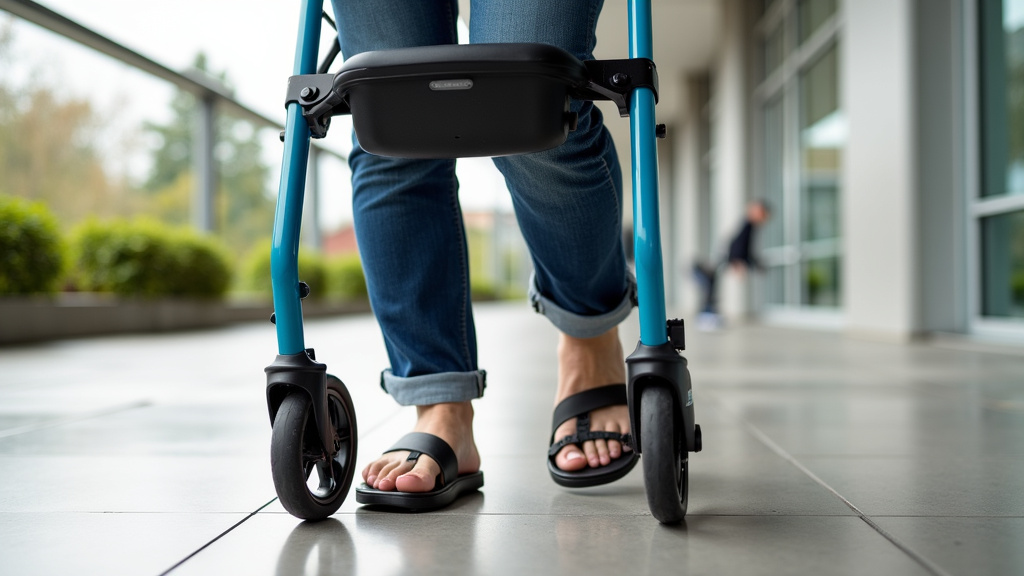
Knee Walker vs. Medical Scooter: What’s the Difference?
Sometimes, you might hear the term “medical scooter.” It’s important to know that this usually refers to a different type of device. A “medical scooter”, often called a mobility scooter, is a powered device designed for individuals with long-term mobility impairments. Think of people who have difficulty walking due to chronic conditions like arthritis, MS, or stroke. These scooters are battery-powered and have a seat, tiller steering, and a much larger frame.
A knee walker, on the other hand, is a non-powered, manual device. You propel it yourself using your own strength. It’s designed for temporary mobility needs, typically for recovery from an injury or surgery. So, while both are mobility aids, they serve very different purposes and user groups. It’s crucial to use the right term to ensure you’re looking at the correct equipment. A knee walker is for short-term, non-weight-bearing needs; a medical scooter is for longer-term, chronic mobility challenges.
Conclusion
You’ve learned that the medical term for a knee scooter is a “knee walker”. While the common name is widely used, understanding the official terminology helps when communicating with healthcare providers and ordering equipment. We’ve seen how knee walkers offer a stable, less strenuous alternative to crutches, supporting your mobility during recovery from foot, ankle, or lower leg injuries. By choosing the right knee walker based on adjustability and safety features, you can navigate your recovery with greater independence and comfort.
Your next step is to discuss with your doctor or physical therapist if a knee walker is the best fit for your specific recovery needs. This conversation will help you make an informed decision about your mobility aid.
Frequently Asked Questions
What’s the difference between a “knee scooter” and a “knee walker”?
Essentially, there’s no functional difference; “knee scooter” is the common, everyday name. The official medical term preferred by healthcare professionals and manufacturers is “knee walker”. This term accurately describes how the device supports your knee to help you move.
Can a knee walker be used for injuries other than the foot or ankle?
Yes, a knee walker is suitable for any injury or surgery on your foot, ankle, or lower leg that requires you to avoid putting weight on that limb. It’s designed to support the entire lower leg for non-weight-bearing mobility.
Is a knee walker better than crutches for recovery?
For many people, a knee walker offers less strain on the upper body and arms compared to crutches. It can also allow for more independence and hands-free convenience, potentially leading to less fatigue during recovery.
Do I need a prescription to get a knee walker?
While not always required, it’s highly recommended to consult with your doctor or physical therapist before getting a knee walker. They can confirm if it’s appropriate for your injury and help you choose the right type.
Can I use a knee walker on different surfaces?
Most knee walkers are designed for indoor use on smooth, flat surfaces like floors and sidewalks. Larger wheels can help provide a smoother ride over slightly uneven terrain, but it’s best to check the manufacturer’s recommendations for optimal use.