Knee Scooter vs. Cane: Everything to Know
When recovering from a leg injury, a knee scooter is generally a better choice than a cane for most people. Knee scooters offer greater mobility and stability, allowing you to move around more freely. They reduce strain on your injured leg and your good leg. Many users find them much easier to manage.
Choosing between mobility aids can feel overwhelming. We understand that dealing with an injury is tough enough. You need reliable support to get back on your feet. Understanding the differences helps you pick the right tool for faster recovery and comfort. Both have their place, but one might suit your needs better.
- Knee scooters offer better stability.
- They reduce strain on your uninjured leg.
- Canes can be simpler for short-term use.
- Consider your specific injury and daily needs.
- Both require a learning curve.
Let’s compare a knee scooter and a cane so you can decide which one is right for you. We’ll look at how they work and what makes each one stand out.
Knee Scooter vs. Cane: Which Mobility Aid is Right for You?
Deciding between a knee scooter and a cane can make a big difference in how you manage an injury. Both help you get around. But they offer very different experiences. We’ve looked at what makes each one unique. This will help you pick the best tool for your recovery.
Understanding the Knee Scooter
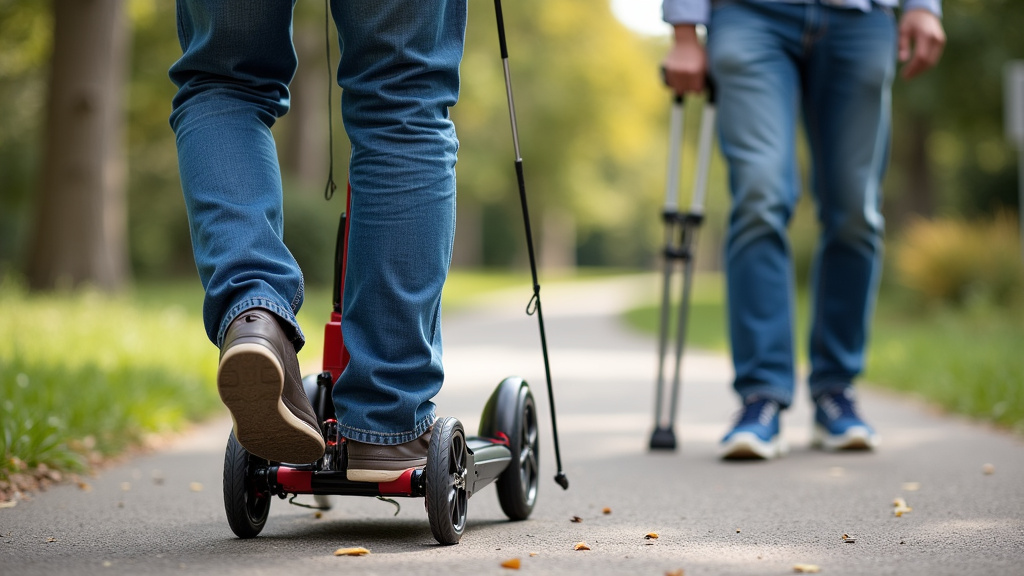
A knee scooter is a rolling device. It has a padded platform. You rest your injured leg on this platform. It also has handlebars for steering and balance. You use your good leg to push off the ground. This propels you forward. Think of it like a scooter you might have ridden as a kid. But it’s designed for injury recovery. Our guide to what a steerable knee scooter is explains its design and function.
How a Knee Scooter Works
You place your injured knee and shin on the padded rest. Your foot should hang off the end, not touch the ground. Then, you push with your uninjured leg. It’s like walking, but one leg is elevated. The handlebars help you steer and maintain balance. Most knee scooters have hand brakes. These allow you to slow down or stop quickly. This setup puts less stress on your injured leg and your whole body.
Benefits of Using a Knee Scooter
Knee scooters offer several advantages. They provide excellent stability. The wheels and handlebars keep you steady. This reduces the risk of falls. They also allow for a more natural walking motion with your good leg. This means less strain on your uninjured leg. Many users find it easier to navigate uneven surfaces. They can also be more convenient for longer distances. You can often carry items with one hand while steering.
When a Knee Scooter Shines
These scooters are great for injuries below the knee. This includes foot fractures, ankle sprains, and Achilles tendon injuries. They are also ideal for people who need to keep weight off their foot or ankle for an extended period. If you need to move around your home or office frequently, a scooter is a good bet. It helps maintain a sense of independence.
Understanding the Cane
A cane is a single-point support tool. It’s typically used on the side opposite your injured leg. It helps bear some of your weight. This reduces pressure on your injured limb. Canes are much simpler than knee scooters. They don’t have wheels or complex mechanisms.
How a Cane Works
You hold the cane in the hand on the side of your uninjured leg. As you step forward with your injured leg, you advance the cane. The cane moves at the same time as your injured leg. You then shift your weight onto the cane and your uninjured leg. This helps take some of the load off your injured side. It’s a simple way to get around with less pain.
Benefits of Using a Cane
Canes are very lightweight and portable. They are easy to carry and store. They can be adjusted to different heights. For short-term injuries, like a minor sprain, a cane can be sufficient. They are also often less expensive than knee scooters. Some people find them easier to manage in tight spaces, like narrow hallways or crowded stores.
When a Cane Shines
A cane is often recommended for less severe injuries. It’s useful when you only need partial weight-bearing. It’s also a good option for people with balance issues. If you only need support for short periods, a cane might be all you need. It’s a basic tool that can provide essential assistance.
Key Differences: Scooter vs. Cane
Let’s break down the main differences. This will help you see which one might fit your lifestyle best. It’s not just about the injury. It’s also about how you live your life.
Stability and Balance
Knee scooters offer superior stability. With three or four wheels, they are very steady. They have handlebars you can grip. This is a huge advantage compared to a cane. A cane provides only a single point of contact. This means it offers less balance support. Falling can be a bigger risk with a cane.
Strain on Your Body
A knee scooter reduces strain on your entire body. By supporting your injured leg completely, it allows your good leg to do most of the work. This means less fatigue for your uninjured leg and your back. Using a cane can lead to overusing your uninjured leg. This can cause aches and pains in your hip and knee. Many people report hand and wrist strain from using a cane for long periods. Research from physical therapy sources often points to the cane’s potential for causing secondary pain.
Mobility and Speed
Knee scooters generally allow for faster movement. You can glide along with ease. They are great for covering longer distances. Think about getting around a large store or a workplace. A cane is much slower. Each step requires more effort. You’re essentially performing a modified gait with each step.
Ease of Use and Learning Curve
While both require some adjustment, knee scooters can feel more intuitive. The learning curve for a cane might be shorter for some. But mastering the cane’s balance can take time. Knee scooters require you to get used to pushing with your good leg. You also need to learn to steer and brake effectively. Many users find the scooter easier to master with a little practice.
Portability and Storage
Canes are clearly the winner here. They are lightweight and fold easily. They fit in car trunks or can be hung on a chair. Knee scooters are bulkier. They take up more space. Some newer models are foldable, but they are still larger than a cane. If you have limited space or travel frequently, this is an important factor.
Comparison Table: Knee Scooter vs. Cane
| Feature | Knee Scooter | Cane |
|---|---|---|
| Stability | High (3-4 wheels, handlebars) | Low (single point of contact) |
| Body Strain | Low (reduces stress on good leg and back) | Moderate to High (can strain good leg, back, hands) |
| Mobility/Speed | High (glides, good for distances) | Low (slower, requires more effort) |
| Learning Curve | Moderate (requires practice) | Low to Moderate (easier start, mastery takes time) |
| Portability | Low (bulkier, some foldable) | High (lightweight, easy to store/carry) |
| Cost | Moderate to High | Low |
| Ideal For | Below-knee injuries, longer recovery, frequent mobility needs | Minor injuries, short-term use, limited mobility needs, tight spaces |
Making Your Choice: Key Considerations
Your decision depends on a few things. Think about your specific injury. How long will you need support? What is your daily routine like? Are you recovering from surgery? Are you dealing with a simple sprain? These details matter.
Your Injury Type and Severity
For injuries like a broken foot, ankle, or Achilles tendon tear, a knee scooter is often the preferred choice. These injuries typically require keeping your foot completely off the ground. A cane can help, but it doesn’t offer the same level of support and stability. For a mild sprain or bruise, a cane might be enough assistance.
Your Daily Activities and Environment
Do you need to travel long distances? Do you live in a multi-story home? Will you be navigating crowded spaces? If you need to be mobile for extended periods, a knee scooter is far more energy-efficient. If you mostly stay in one area and only need occasional support, a cane might be fine. Consider your home layout too. Can you easily maneuver a scooter? Are there many stairs?
Comfort and Ease of Use
Comfort is key for any recovery tool. Many people find knee scooters more comfortable for longer use. They allow you to stand upright more naturally. This reduces back strain. You can also often carry items more easily. A cane can lead to leaning and awkward postures. This can cause discomfort over time. Remember to try both if possible before committing.
Long-Term vs. Short-Term Needs
If your injury is temporary and expected to heal within a few weeks, a cane might suffice. However, for injuries requiring months of non-weight-bearing, the investment in a knee scooter often pays off. It can make your daily life much more manageable and less painful. You want to be able to function.
Checklist for Choosing Your Mobility Aid
Use this quick checklist to help you decide:
- Assess your injury: Is it severe? Does it require full non-weight-bearing?
- Consider your daily routine: How much will you be moving around?
- Think about your environment: Are there stairs? Narrow doorways?
- Evaluate your physical condition: Do you have balance issues? Strength concerns?
- Budget: How much are you willing to spend? (Note: insurance may cover some costs).
- Duration of need: Is this a short-term fix or a longer recovery period?
By thinking through these points, you can make a more informed decision. Both tools have their place. Your personal circumstances will guide you to the right choice for a smoother recovery.
Conclusion
Choosing between a knee scooter and a cane comes down to your specific injury, daily needs, and comfort. Knee scooters generally offer superior stability and mobility, making them ideal for longer recovery periods and more active individuals. Canes are simpler, more portable, and often suitable for minor injuries or short-term support. After considering your injury type, your environment, and how long you’ll need assistance, you can make the best choice. If possible, try both to see what feels right for your recovery journey.
Frequently Asked Questions
Can a knee scooter help with injuries above the knee?
Knee scooters are primarily designed for injuries below the knee, such as foot, ankle, or lower leg issues. They work by keeping your injured leg elevated. For injuries above the knee, a cane or crutches might be more appropriate, as they allow for more varied leg positioning.
How do I know if I’m using a cane correctly?
You should hold the cane in the hand on the side of your uninjured leg. As you step forward with your injured leg, advance the cane at the same time. Your cane should feel like an extension of your body, providing support and helping you maintain balance without leaning too heavily on it.
Are knee scooters safe to use on stairs?
No, knee scooters are generally not safe to use on stairs. They are designed for level surfaces. Attempting to navigate stairs with a knee scooter can lead to instability and falls. You will likely need to use crutches or have assistance when encountering stairs.
Can using a cane cause pain in my good leg or back?
Yes, prolonged or improper cane use can lead to secondary pain. Over-reliance on your good leg can cause strain in your hip, knee, and back. This is because a cane offers limited support, and you may adopt an awkward posture to compensate.
Which option is better for recovery speed?
While neither directly speeds up healing, a knee scooter can improve your overall mobility and independence during recovery. This can lead to better mood and adherence to rehabilitation activities. Greater stability can also reduce the risk of re-injury, potentially leading to a smoother recovery process.