What Are the Parts of a Knee Walker Really?
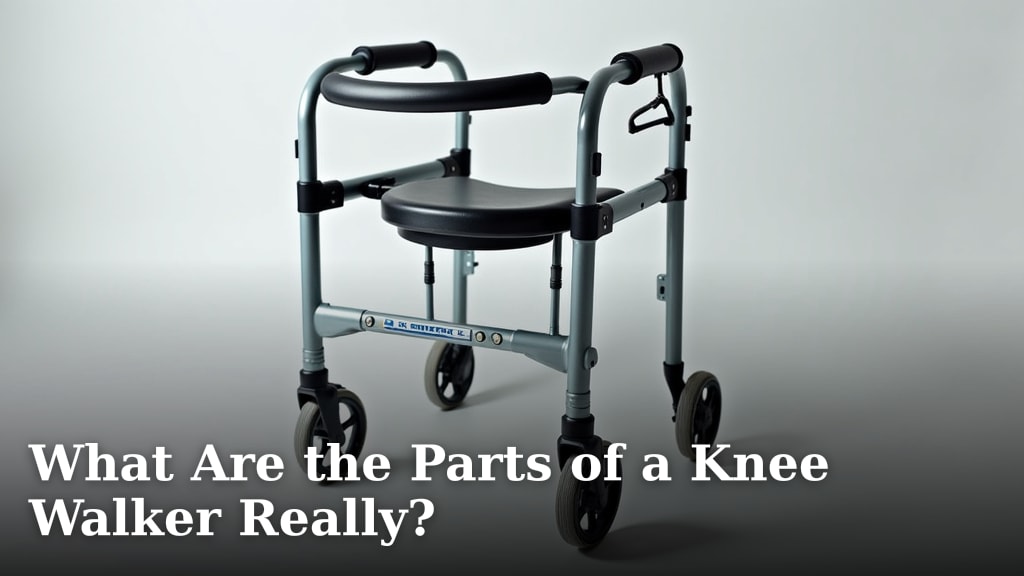
A knee walker, also known as a knee scooter, is a mobility device that helps people with leg injuries move around. It has a platform to rest your injured knee and a wheel for movement. This frees up your hands and makes walking easier.
You’ll find several key parts on any knee scooter. These include the handlebars for steering and braking, the padded knee support, and the sturdy frame holding everything together. The wheels allow for smooth gliding over most surfaces. Understanding these components helps you use your device safely and effectively.
- Knee walkers help with leg injuries.
- They have a platform for your knee.
- Key parts are handlebars, knee rest, and wheels.
- These parts help you move safely.
Let’s take a closer look at each part and what it does for you.
Breaking Down the Anatomy of Your Knee Walker
You’re probably wondering what exactly makes up this helpful device that’s keeping you mobile. It’s not overly complicated, but understanding the different parts helps you use your knee walker with more confidence. We’ve found that a little knowledge goes a long way when you’re relying on a mobility aid. Understanding the different parts helps you use your knee walker with more confidence, as explained in our overview of steerable knee scooters.
Think of your knee walker like a stable, rolling stool. It’s designed to support your injured leg while allowing you to move around freely. Each piece plays a specific role in making that happen safely and comfortably for you.
The Core Structure: Frame and Wheels
Every knee walker has a sturdy base. This is typically the metal frame of the device. It’s the skeleton that holds everything else together and supports your weight. The frame needs to be strong but also lightweight enough for you to maneuver.
Attached to this frame are the wheels. Most knee walkers come with three or four wheels. These are usually made of durable rubber or a similar material. They are designed to roll smoothly over various indoor surfaces like tile, wood, and carpet. Some models may have larger wheels for better outdoor performance.
How the Wheels Work for You
The wheels are your engine! They allow you to glide from room to room or navigate short distances. You propel yourself by pushing off with your good leg. It’s a bit like riding a scooter, but with a bit more stability.
We found that the quality of the wheels can make a big difference in how easy the knee walker is to use. Smooth-rolling wheels mean less effort for you. Many models use ball bearings within the wheels. This helps reduce friction and makes for a smoother, quieter ride.
The Steering and Control Center: Handlebars
The handlebars are where you have control. They’re mounted on top of the steering column. This column connects to the front wheel(s), allowing you to change direction. Steering is similar to a bicycle, but you’re using your hands instead of your feet.
You’ll find that the handlebars are typically height-adjustable. This is super important. Proper handlebar height helps you maintain good posture and prevents you from slouching. Slouching can lead to back strain, which you definitely don’t need when you’re already dealing with a leg injury.
Braking System: Your Safety Net
Integrated into the handlebars are the brakes. These are your primary safety feature. Most knee walkers have hand brakes, much like a bicycle. Squeezing the brake levers applies pressure to the wheels, slowing them down or stopping the device completely.
It’s essential to get comfortable with the braking system right away. Practice squeezing the levers gently to slow down and firmly to stop. We found that users who test the brakes in a safe, open area first feel much more confident using the walker.
Some models also feature a locking brake. This is a fantastic addition. It keeps the knee walker from rolling when you’re trying to sit down or stand up. This is a crucial safety feature, especially on inclines or slippery floors. Always make sure to engage the locking brake when you’re stationary.
The Support System: Knee Pad and Leg Rest
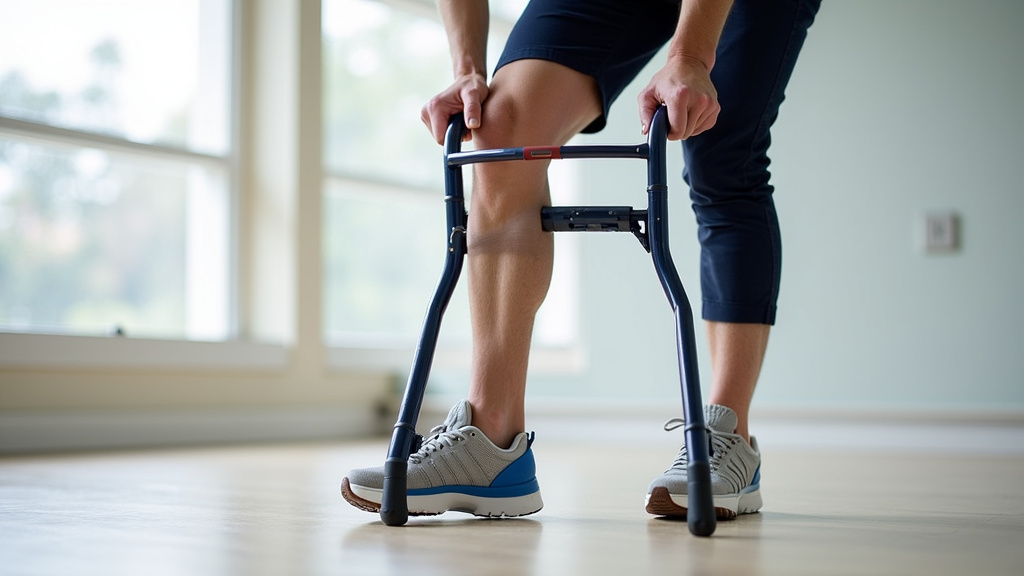
This is the part that makes a knee walker unique. The knee pad, or knee rest, is a cushioned surface. Your injured leg rests here, usually with your knee bent at about 90 degrees. The pad is designed to be comfortable and provide stable support.
We’ve seen that the quality of the knee pad varies. A good pad is firm enough to support your leg without being too hard. It should also be wide enough to accommodate your lower leg comfortably. Many pads are made of high-density foam, which offers a good balance of support and cushioning.
Proper Positioning on the Knee Pad
How you position your leg on the pad matters. Generally, you want to place the shin of your injured leg on the pad. Your foot should be free to dangle or be supported slightly by a tray if your model has one. Avoid putting direct pressure on your knee joint itself.
Many experts suggest ensuring the pad is at the correct height for you. When you’re sitting on the device, your injured knee should be comfortably supported. Your good leg should be able to reach the ground easily for propulsion. Adjusting the height of the knee pad is usually straightforward.
Adjusting the Knee Pad for Your Comfort
Just like the handlebars, the knee pad is almost always adjustable in height. This allows you to fine-tune the fit to your specific needs. You want to find a height that keeps your injured leg comfortably supported without straining your back or hips.
We found that some knee walkers also allow you to adjust the knee pad’s position from left to right. This can be helpful if you need to favor one side slightly. Check your user manual for specific instructions on how to make these adjustments for your model. Taking the time to do this can greatly improve your comfort level.
Convenience Features: Baskets and Trays
While not every knee walker has them, you’ll often find helpful accessories like baskets or trays. These are usually attached to the front of the handlebars.
A basket or tray can be a lifesaver for carrying everyday items. Think about your phone, a book, a water bottle, or even a small bag. Being able to keep these essentials with you without having to juggle them is a big plus. It means fewer trips back and forth and more independence.
What Can You Carry?
Baskets are great for softer items. Trays offer a flatter surface for cups or more rigid objects. We found that users often report how much easier their daily tasks become with these added storage options. It’s a simple feature that makes a significant difference in your day-to-day life.
Remember to keep the weight in your basket or tray reasonable. Overloading it could affect the walker’s stability and make it harder to steer and brake effectively. Always prioritize safety over carrying capacity.
Here’s a quick checklist to help you identify the main parts on your knee walker:
- Handlebars: For steering and your hand brakes.
- Brake Levers: Located on the handlebars to control speed and stop.
- Frame: The main body structure that supports your weight.
- Wheels: Usually 3 or 4, allowing you to glide.
- Knee Pad: Padded support for your injured leg’s shin.
- Storage (Optional): A basket or tray for carrying items.
Conclusion
You’ve now got a clear picture of your knee walker’s anatomy. Understanding the frame, wheels, handlebars, brakes, and knee pad helps you use it safely and comfortably. Don’t forget the helpful additions like baskets for carrying your essentials.
Your mobility is important during recovery. Take a moment today to ensure each part is adjusted correctly for your body. This simple step can make a big difference in your comfort and independence.
Frequently Asked Questions
How do I adjust the knee pad height?
Most knee walkers have a lever or knob on the steering column. You’ll typically loosen this to slide the knee pad up or down. Find a height where your injured leg rests comfortably without straining your back.
Can I use my knee walker on rough outdoor surfaces?
While some models have larger wheels for better outdoor use, they are primarily designed for smooth indoor surfaces. We’ve found that rough terrain can make steering difficult and may not be safe. Stick to sidewalks or well-maintained paths if you go outside.
What’s the best way to use the locking brake?
The locking brake is usually a lever near the handlebars that you push down. You should engage it whenever you need the walker to stay completely still, like when sitting down or standing up. Ensure it’s fully engaged before you shift your weight.
How often should I check my knee walker’s tires?
We recommend checking your tires periodically for wear and tear. Ensure they are properly inflated if they are air-filled and that there are no visible cracks or damage. Good tire condition ensures a smoother, safer ride.
Is it okay to put heavy items in the storage basket?
It’s best to keep items in the basket or tray reasonably light. Overloading can affect the walker’s balance and make it harder to steer and brake. Always prioritize stability and safety over how much you can carry.