Is a Knee Scooter Actually a Wheelchair?
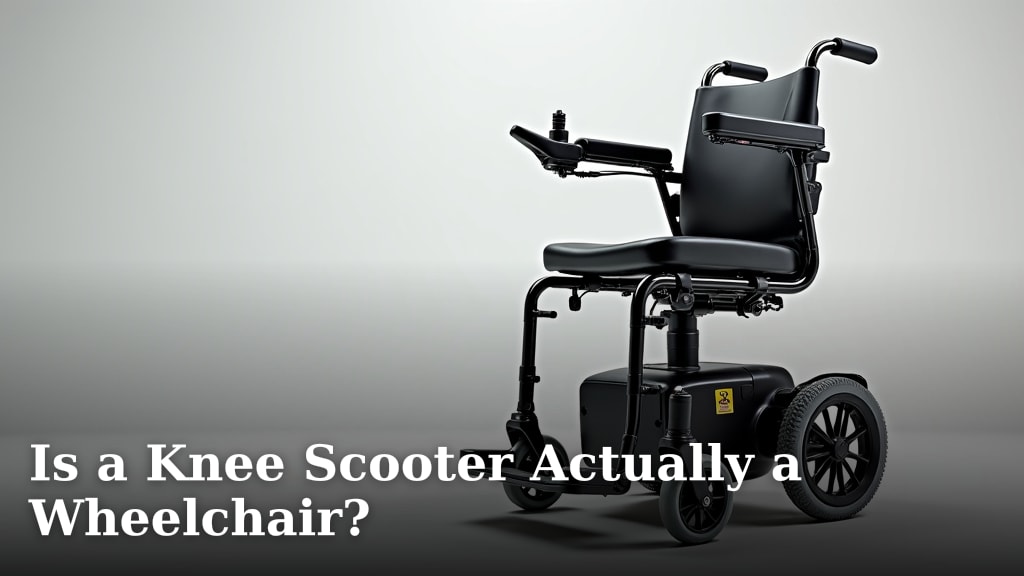
A knee scooter is not a wheelchair. While both are mobility aids, they are different devices with distinct designs and uses. A wheelchair typically has a seat and wheels you propel with your hands or feet.
Many people confuse them because knee scooters and wheelchairs both help with mobility after an injury. We found the main difference is that a knee scooter requires you to rest one knee on a pad. It’s more like a hands-free walker than a chair.
- A knee scooter is a mobility device, not a wheelchair.
- It is designed for lower-leg injuries, not for sitting.
- You steer with handlebars and push with your good foot.
- It offers more independence on flat ground than crutches.
- However, it does not provide the same full-body support as a wheelchair.
Below, we break down the key differences between these two aids. We will cover what each is best for and how to choose the right one for your recovery.
Understanding the Core Difference: Knee Scooter vs. Wheelchair
To put it simply, a knee scooter is not a wheelchair. Think of them as tools for different jobs. A wheelchair is a chair with wheels. It’s designed to support your entire body while you sit. A knee scooter is more like a hands-free, steerable platform for your injured leg. You don’t sit on it. You kneel on it.
Many people recovering from foot, ankle, or lower leg surgery find themselves asking about these devices. We found that the confusion often comes from seeing both advertised as “mobility aids.” They are, but they solve very different problems. Let’s look closer at what each one is designed to do.
What Exactly Is a Knee Scooter?
A knee scooter, also called a knee walker, is a wheeled device that lets you get around without putting any weight on one of your legs. It has handlebars for steering, wheels, and a cushioned platform where you rest your knee. Your good leg stays on the ground and does all the pushing. You steer with your hands, like you’re riding a scooter without a seat.
Primary Purpose and Design
The main goal is to keep your injured leg elevated and completely non-weight-bearing. This is often a medical requirement after surgeries like an Achilles tendon repair, ankle fusion, or severe fractures (American Academy of Orthopaedic Surgeons). The design enforces this rule. If you try to put your injured foot on the ground, you simply can’t while using it.
It’s an active device. You are upright and moving yourself. This gives you a lot of freedom to navigate your home, go to the mailbox, or move around a workplace. For many, it’s a game-changer compared to struggling with crutches.
What Exactly Is a Wheelchair?
A wheelchair is a chair mounted on wheels. It is designed to provide seated mobility for someone who cannot walk or cannot walk safely for long distances. You propel it by pushing on the large rear wheels by hand or have someone push you. Many also have footrests to support your legs.
The key word here is “support.” A wheelchair supports your whole body in a seated position. This is essential for many conditions that affect the legs, back, or overall stamina. It’s not just for the leg; it’s a system to support your entire body while moving or resting.
Primary Purpose and Design
Wheelchairs are built for long-term use or for those with permanent or chronic mobility limitations. The design prioritizes stability, comfort for sitting, and sometimes specialized positioning. You can use a wheelchair for extended periods throughout the day. Many guidelines from organizations like the CDC note that proper wheelchair fitting is crucial for preventing secondary injuries like pressure sores.
Key Comparison at a Glance
Seeing the differences side-by-side can be very helpful. We found that a quick comparison makes the distinction clear. Here is a table breaking down the most important factors.
| Feature | Knee Scooter | Wheelchair |
|---|---|---|
| Posture | Upright, kneeling | Seated |
| Weight-Bearing | Forbids weight on one leg; uses one good leg | No weight-bearing on legs required |
| Propulsion | You push with your good foot | You push wheels with hands, or someone pushes you |
| Best For | Temporary, non-weight-bearing lower leg injuries | Long-term or chronic mobility issues; fatigue |
| Space/Maneuverability | Good on flat, even surfaces | Variety of models for different spaces |
| Full Body Support | No; only supports the knee | Yes; provides seat, back, and leg support |
When Is a Knee Scooter the Right Choice?
A knee scooter shines in specific scenarios. It’s best for temporary situations where your doctor insists you put absolutely no weight on one foot or ankle for a set number of weeks.
- Post-Surgery Recovery: After ankle, foot, or Achilles surgery. It’s the top choice to keep you mobile while healing.
- Fractures: For a broken foot, toes, or lower leg where crutches would be exhausting.
- Active Lifestyles: If you need to get around a larger home or office and crutches aren’t feasible.
We found that studies in orthopedic recovery often highlight knee scooters for improving patient independence and satisfaction during the healing process (Journal of Orthopaedic Trauma). They let you carry items, use doors, and move faster than with crutches.
Major Limitations to Consider
However, a knee scooter has serious drawbacks. It’s not a solution for everyone, even with a leg injury.
- Terrain Challenge: It works terribly on stairs, thick carpet, grass, or gravel. You are stuck on smooth, flat ground.
- No Rest Option: You cannot sit down to rest while using it. You must get off and find a chair. A wheelchair lets you rest at any time.
- Upper Body Strain: Steering and pushing for long periods can tire your arms and wrists.
- Falls Risk: It has a higher center of gravity. A small wheel catching on something can lead to a tumble.

When Is a Wheelchair the Right Choice?
A wheelchair is the appropriate tool when your mobility limitation is more widespread or long-term. It’s the answer to a different set of needs.
- Inability to Bear Weight at All: For severe injuries or conditions affecting both legs.
- Chronic Conditions: For issues like multiple sclerosis, severe arthritis, or heart/lung conditions that cause extreme fatigue.
- Long-Distance Mobility: When you need to cover distances your body simply cannot manage on foot or with a scooter.
- Need for Constant Seating: If you tire easily and need to sit down frequently, a wheelchair provides built-in rest.
Using a wheelchair is about preserving energy and safety. It’s not a sign of giving up; it’s a smart way to participate in life. Many clinics and government resources emphasize that the right wheelchair is essential for health and community access.
Can You Use a Knee Scooter Like a Wheelchair?
No, and you shouldn’t try. They are not interchangeable. A knee scooter does not offer the support, comfort, or positioning a wheelchair provides. Sitting on the knee pad is unsafe and unstable. The device isn’t designed to handle the weight distribution of a seated person.
Imagine using a hammer to drive a screw. It might work for one screw, but it’s the wrong tool. You’ll damage the screw, the wall, and maybe hurt your hand. Similarly, using a knee scooter as a seated chair is awkward, uncomfortable, and unsafe. Always use each device for its intended purpose.
Choosing the Best Aid for Your Recovery
Your choice should always be guided by your specific medical needs. We found that consulting with your doctor or physical therapist is the most important step. They understand the details of your injury and your overall health.
Consider these practical questions. They can help you think through the decision. Do you need to navigate stairs multiple times a day? A knee scooter will be a nightmare. Is your main goal to get from the bedroom to the kitchen? A scooter might work perfectly. Are you recovering from surgery, or is this a long-term condition? Timeframe matters immensely.
A Quick Checklist for Decision-Making
Use this list to discuss with your healthcare provider. It’s a starting point for your conversation.
- Does my doctor require strict non-weight-bearing status on one leg for several weeks?
- Is my home environment mostly flat and free of steps?
- Do I have the upper body strength and balance to safely operate a scooter?
- Is my condition temporary, or will it affect my mobility for months or longer?
- Do I need to rest frequently throughout the day, making a seat essential?
There is no single “best” device. The best one is the one that matches your injury, your lifestyle, and your recovery plan. Both tools have their place in the world of mobility aids.
Moving Forward with the Right Support
We hope this clears up the confusion. A knee scooter and a wheelchair are both valuable, but they serve distinct purposes. One is an active, short-term tool for a specific type of injury. The other is a supportive, often long-term solution for broader mobility needs.
Getting the right aid can dramatically improve your quality of life during recovery. It can mean the difference between being stuck in one room and being able to join your family at the dinner table. Take the time to evaluate your needs honestly. Then, talk to a professional. They will help you find the path back to your routine, safely and effectively.
Conclusion
So, a knee scooter and a wheelchair are both valuable tools, but they are not the same thing. A scooter is an active aid for a specific, temporary leg injury. A wheelchair provides full-body support for a wider range of needs. We found the right choice depends entirely on your diagnosis and your life.
Don’t guess about what you need. Your best next step is to have a conversation with your doctor or physical therapist. They can review your injury and help you choose the safest, most effective mobility aid for your recovery.
Frequently Asked Questions
Will my health insurance pay for a knee scooter?
Coverage depends entirely on your plan and your doctor’s prescription. Many insurance providers, including Medicare, will cover a knee scooter if it is deemed medically necessary for your recovery. You must get a prescription and often use an in-network supplier to qualify.
Can I use a knee scooter if my injury is to my knee, not my foot?
Generally, no. A standard knee scooter requires you to kneel on the pad, which puts pressure on the knee. For a knee injury, you should discuss other options like a standard walker or wheelchair with your healthcare provider, as using a knee scooter could worsen your condition.
What surfaces can I use a knee scooter on?
Knee scooters work best on smooth, flat, indoor surfaces like tile, hardwood, or low-pile carpet. They handle cracked pavement poorly and are unsafe on grass, gravel, or sand. Stairs are a major obstacle; you cannot use a scooter on stairs.
Is it possible to need both a wheelchair and a knee scooter?
Yes, some people use both. For example, you might use a knee scooter for independence at home on the main floor. You might then use a lightweight wheelchair for trips out to doctor appointments or for longer distances where the scooter is impractical.
How long can I expect to use a knee scooter?
The duration depends on your healing timeline. Most people use a knee scooter for several weeks, from about 4 to 12 weeks, while they are in a non-weight-bearing phase. Your doctor will tell you when it’s safe to start putting weight on your leg again.