Is a Knee Scooter Really Considered Motorized?
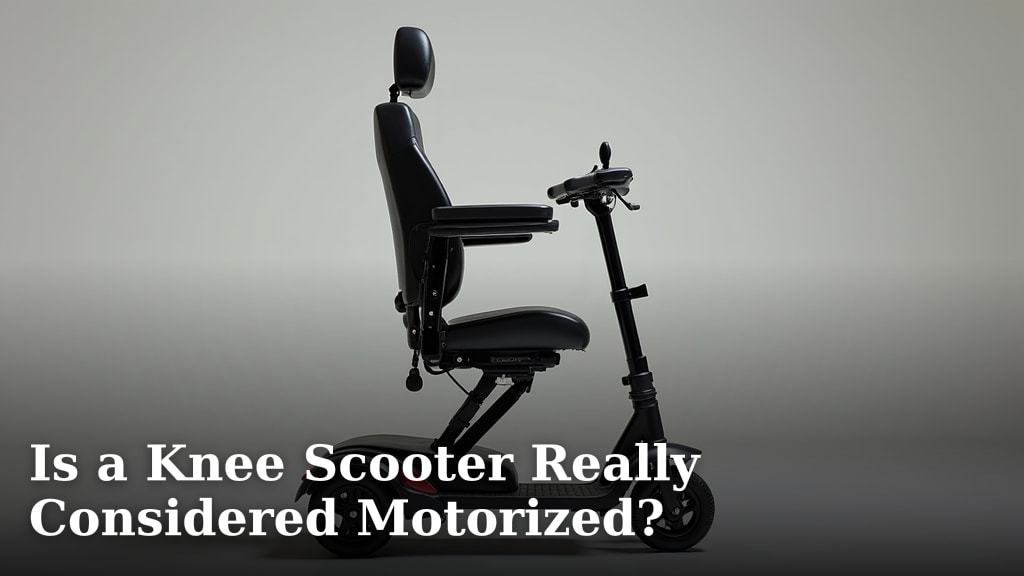
No, a knee scooter is not considered motorized. It’s a clever medical device that you propel yourself using your non-injured leg. Think of it more like a bike without pedals, designed for stability and ease of movement when one of your legs can’t bear weight.
You might be wondering if it’s like a Segway or a hoverboard. The answer is a definite no. Knee scooters rely entirely on your own muscle power. This makes them a safe and effective option for temporary mobility needs, like after surgery or an injury. They are completely human-powered.
- Knee scooters are not motorized.
- You use your own leg power to move.
- They are designed for stability and ease.
- They are a great alternative to crutches.
Let’s take a closer look at how these helpful mobility aids work and why they’re such a popular choice for so many people.
How Do Knee Scooters Work Without a Motor?
You might be wondering how a knee scooter moves you around if it doesn’t have a motor. The answer is quite simple and relies on good old-fashioned physics and your own body. These devices are designed to be propelled by your own strength, making them an excellent alternative to crutches or canes.
The Mechanics of Movement
Think of a knee scooter as a sturdy, wheeled platform. It has a padded area where you rest your injured leg, typically at a 90-degree angle. Your other leg, the uninjured one, is used to push off the ground. This is very similar to how you’d propel a skateboard or a child’s scooter.
Each push from your good leg generates forward momentum. The more you push, the faster you go. Steering is also managed by your hands. You simply turn the handlebars in the direction you want to go. It requires a bit of balance and coordination, but most people find it intuitive to learn.
Pushing Off the Ground
The act of pushing off is straightforward. You’ll stand with your weight primarily on your uninjured leg. Then, you’ll push that leg backward, extending it away from the scooter. This action propels the scooter and you forward. It’s a controlled movement that allows you to navigate various surfaces.
Steering and Control
The handlebars on a knee scooter function much like those on a bicycle. Turning them left or right directs the front wheels. This gives you the ability to maneuver around obstacles, change direction, and navigate tight spaces. It’s a very responsive system.
Why No Motor? The Benefits of Human Power
The absence of a motor is actually one of the biggest advantages of knee scooters. This design choice makes them lighter, simpler, and more affordable. It also means you don’t have to worry about charging batteries or dealing with mechanical engine issues. Your own energy is the fuel!
Furthermore, relying on your own power means you’re actively engaging your muscles, even with an injured leg. This can be beneficial for maintaining some level of fitness and coordination during your recovery period. Many physical therapists endorse them for this very reason (American Physical Therapy Association guidelines). You remain an active participant in your mobility.
Comparing Knee Scooters to Motorized Devices
It’s helpful to understand how knee scooters differ from devices that are motorized. This way, you can see why they fall into a completely different category. Think about electric scooters or mobility scooters designed for individuals with significant mobility impairments.
Electric Scooters vs. Knee Scooters
Electric scooters, like those you see on city streets, have a motor and battery. They move at the push of a button or a throttle. You don’t need to exert physical effort to make them go. They are designed for transportation over longer distances or for people who cannot self-propel.
Knee scooters, on the other hand, require your physical input. They don’t have a motor, battery, or throttle. They are essentially non-motorized wheeled carts. This distinction is important for understanding their classification and how they are regulated.
Mobility Scooters: A Different Purpose
Mobility scooters are often three or four-wheeled vehicles. They are powered by an electric motor and a rechargeable battery. Their primary purpose is to assist individuals with permanent or long-term mobility challenges. They are designed for independence and to cover greater distances than a person might be able to walk.
A knee scooter is a temporary mobility aid. It’s for people who can still use one leg to propel themselves. The goal is to facilitate movement while one leg is healing, often for a few weeks or months. The FDA classifies them as Class I medical devices, which are low-risk devices.
Are There Any “Motorized” Knee Scooters?
To be absolutely clear, what you typically find in stores and pharmacies and what’s recommended by doctors for post-injury recovery are not motorized. The term “knee scooter” specifically refers to the human-powered variety.
Occasionally, you might find custom-built or experimental devices that incorporate motors. However, these are extremely rare and are not what is commonly understood as a knee scooter. They would likely be classified very differently due to the motorization. For all practical purposes, if you’re looking at a standard knee scooter for recovery, it is human-powered.
Understanding Product Descriptions
When shopping for a knee scooter, always look for descriptions that emphasize self-propulsion. You should see mentions of using your “non-injured leg” for movement. If a product description uses terms like “electric,” “motor,” “battery-powered,” or “throttle,” it is not a standard knee scooter.
Many manufacturers will explicitly state that their knee scooters are pedal-free and human-powered. This is a key selling point for their simplicity and ease of use. They are designed to be a step up from crutches, not a replacement for motorized transport.
The Legal and Safety Aspects
The fact that knee scooters are not motorized has implications for their use. You generally don’t need a license or special permit to use one. They are considered safe for use on sidewalks and in most indoor environments. Their low speed and reliance on your own control make them predictable.
Motorized devices, even personal ones, can sometimes face restrictions on where they can be used. This is not the case for knee scooters. They are designed to integrate into your daily life during a period of recovery, offering mobility without the complexities of motorization (CDC guidelines on assistive devices).
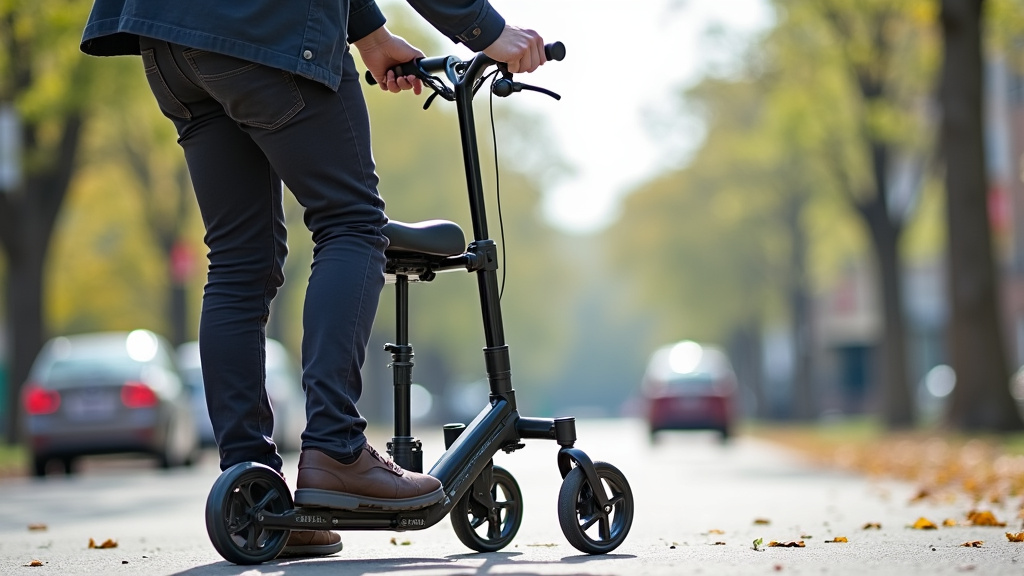
Key Features to Look For (That Don’t Involve Motors)
Since you’re looking for a device that uses your own power, let’s focus on what makes a knee scooter effective and comfortable. These features enhance your experience without needing a motor.
Comfort and Support
The most crucial element is the padded knee rest. It should be wide enough and well-cushioned to comfortably support your injured leg for extended periods. Adjustability in height is also key. You want to ensure your leg is at a comfortable 90-degree angle and the scooter is level with your uninjured leg.
Stability and Braking
A knee scooter needs to be stable. Look for a sturdy frame and wheels that provide good traction. Most models have reliable hand brakes, similar to those on a bicycle. These brakes allow you to slow down or stop quickly and safely. You’ll want to feel secure as you move.
Portability and Storage
Many knee scooters are designed to be foldable. This makes them much easier to transport in a car or store when not in use. Check the weight of the scooter as well. You might need to lift it occasionally, so a lighter model can be more convenient.
Here’s a quick checklist for choosing a non-motorized knee scooter:
- Adjustable height for proper leg positioning.
- Comfortable, padded knee rest.
- Reliable hand brakes for safe stopping.
- Sturdy frame and durable wheels.
- Foldable design for easy transport and storage.
- Weight capacity suitable for your needs.
Your Daily Life with a Knee Scooter
Using a knee scooter is all about regaining some freedom during your recovery. It allows you to perform everyday tasks with much less difficulty than crutches.
Navigating Your Home
Indoors, a knee scooter can be surprisingly agile. You can easily move from room to room. Maneuvering around furniture is generally straightforward. The brakes give you excellent control, even in tighter spaces.
Getting Out and About
When you need to go to the doctor’s office, pick up prescriptions, or run essential errands, a knee scooter is a great companion. It’s much easier to manage than crutches in parking lots or on sidewalks. You’ll feel more independent and less reliant on others.
Remember, the key is that you are the motor! You’re using your own energy to get where you need to go. It’s a smart, simple solution for temporary mobility challenges.
Conclusion
You’ve learned that knee scooters are not motorized devices. They rely on your own leg power for movement, offering a safe and simple way to get around during recovery. Unlike electric scooters, they don’t require batteries or charging, making them a practical choice. You remain in control, using your uninjured leg for propulsion and your hands for steering. This human-powered design makes them affordable, easy to use, and a great alternative to crutches. If you need temporary mobility support, consider if a knee scooter’s human-powered design fits your recovery needs.
Frequently Asked Questions
Can I use a knee scooter on sidewalks?
Yes, you generally can use knee scooters on sidewalks. Because they are human-powered and not considered motorized vehicles, they are usually permitted in pedestrian areas. Always check local regulations just in case, but typically they are treated like walking aids.
How fast can a knee scooter go?
The speed of a knee scooter depends entirely on how fast you push yourself. There is no motor to set a maximum speed. You control your pace with your leg strength, making it a slower, more controlled form of mobility compared to electric options.
Do knee scooters require maintenance like a motorized device?
No, knee scooters require very little maintenance. Since there’s no motor, battery, or complex electronics, you don’t have to worry about charging or mechanical issues. Basic cleaning and checking the brakes and tire pressure are usually all that’s needed.
Are knee scooters safe if they don’t have motors?
Yes, knee scooters are considered safe because they are not motorized. You have direct control over their speed and movement through your own physical actions. The hand brakes provide reliable stopping power, and their design prioritizes stability for users.
Where can I find information on knee scooter regulations?
Since knee scooters are not motorized, they generally fall under guidelines for assistive devices, not vehicles. You can often find information from medical supply companies, physical therapists, or through general search terms like “assistive device regulations” to understand any specific local rules.