How Do You Really Choose a Knee Scooter?
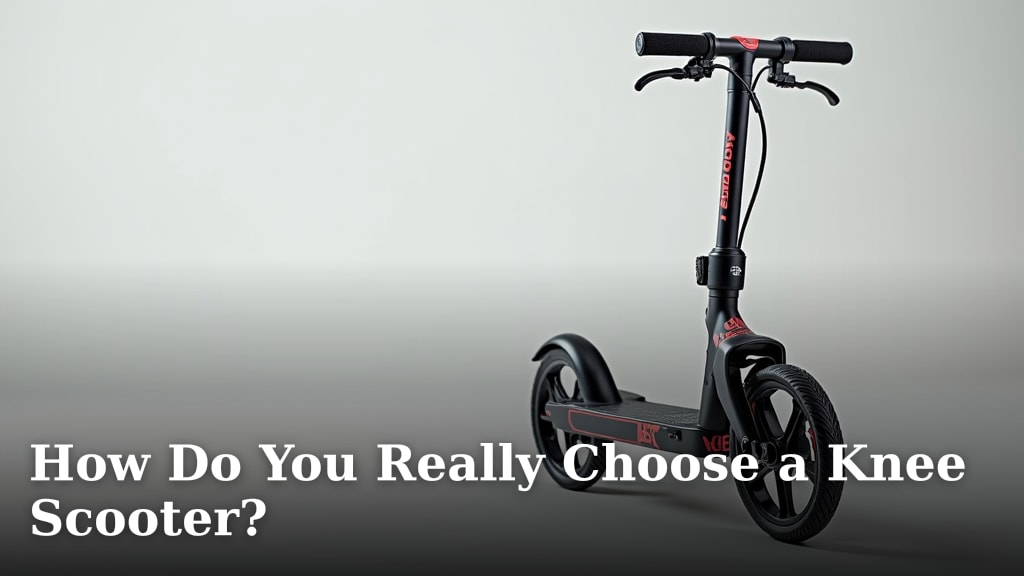
Choosing the right knee scooter involves considering your height, weight capacity, and how you’ll use it. A good knee scooter will feel stable and comfortable, making your recovery much smoother. It’s important to find one that fits your body and your lifestyle.
When looking for a knee scooter, think about features like When looking for a knee scooter, think about features like what a steerable knee scooter is.adjustable handle heights and the type of wheels. You’ll want something that can handle the surfaces you’ll be on most often. Many people find that a scooter designed for indoor and outdoor use offers the most flexibility.
- Consider your height and weight.
- Look at handle adjustability.
- Think about where you’ll use it.
- Check the weight capacity.
- Prioritize comfort and stability.
Let’s walk through the key factors to help you find the best knee scooter for your needs.
Making the Right Knee Scooter Choice
Selecting the perfect knee scooter can make all the difference in your recovery. It’s more than just a mobility aid; it’s your partner through a period of healing. We’ll guide you through the key features to consider so you can move with confidence. Selecting the perfect knee scooter can make all the difference in your recovery; our guide to parts of a knee scooter explains the components.
Understanding Your Needs: The Foundation of Your Choice
Before you even look at different models, take a moment to think about your personal situation. What works for one person might not be the best fit for another. Your height, weight, and how you plan to use the scooter are the most important starting points.
Fit for Your Frame: Height and Weight Considerations
Knee scooters are designed to accommodate a range of users, but getting the right fit is vital for comfort and safety. An improperly sized scooter can lead to strain or an unstable ride.
Height Adjustments for Optimal Comfort
Most knee scooters have adjustable handlebars. This is a critical feature. You want the handlebars to be at a height that allows you to stand comfortably upright without hunching over or reaching too high. Aim for your elbows to be at about a 15-20 degree bend when you’re holding the grips. This position offers the best control and reduces fatigue. Check the minimum and maximum height adjustments to ensure they match your stature. We found that models offering a wider range of adjustments are generally more user-friendly for different family members, too.
Weight Capacity: Safety First
Every knee scooter has a maximum weight capacity. It’s essential to choose a model that can safely support your weight. Exceeding this limit puts undue stress on the frame and wheels, which can be dangerous. Most standard scooters can support between 250 and 350 pounds. Always check the manufacturer’s specifications for the exact weight limit. For heavier individuals, look for bariatric or heavy-duty models that are specifically designed for higher weight capacities. Don’t guess; verify this number before you buy.
Your Daily Journey: Where Will You Roam?
Think about the places you’ll be using your knee scooter most often. This will help you decide what kind of wheels and overall design you need. Will it be mostly indoors on smooth floors, or will you be venturing outdoors onto sidewalks and uneven paths?
Indoor vs. Outdoor Use
If your recovery will keep you mostly inside, a scooter with smaller wheels (around 7-8 inches) might be perfectly adequate. These are often more maneuverable in tight spaces like bathrooms and kitchens. However, if you anticipate needing to navigate uneven surfaces, cracks in sidewalks, or even grass, you’ll want a scooter with larger wheels, typically 9 to 12 inches. Larger wheels offer a smoother ride and can overcome obstacles more easily. Many manufacturers now offer “all-terrain” models designed for versatility.
Maneuverability in Small Spaces
Consider the turning radius of the scooter. Some models are more agile than others. If you live in a smaller home or apartment, a scooter that can easily turn in tight hallways or around furniture will be a lifesaver. Look for models with a narrower base or a more responsive steering mechanism. We’ve seen users struggle with bulky scooters in cramped quarters, so think about your typical environment.
Key Features for a Smoother Ride
Beyond the basic fit and intended use, several features can significantly enhance your experience. These are the details that turn a functional mobility device into a truly comfortable and convenient one.
Braking Systems: Control and Safety
Effective brakes are non-negotiable. Most knee scooters feature dual hand brakes, similar to those on a bicycle. These allow you to slow down or stop gently and securely. Some models also incorporate a locking mechanism, which can be helpful when you need the scooter to stay put while you’re standing or sitting. Test how the brakes feel – they should be responsive and easy to operate. Research suggests that well-maintained brakes can prevent many accidents (Consumer Product Safety Commission).
Comfort and Padding: Your Knee Deserves It
The knee pad is where your injured leg rests, so its comfort is paramount. Look for a thick, contoured pad that distributes pressure evenly. Some pads are made of memory foam or gel for added cushioning. The shape of the pad also matters; a wider pad can offer more support. You’ll be spending a lot of time with your leg on this pad, so don’t underestimate its importance for preventing soreness or pressure points.
Storage Solutions: Carrying Your Essentials
You’ll likely want to carry personal items, a phone, keys, or even a drink. Many knee scooters come with a detachable storage bag or basket. This is a surprisingly useful feature. It means you don’t have to juggle items or ask for help every time you need something. Check the size and placement of the storage area to make sure it meets your needs.
Portability and Storage: When It’s Not in Use
Think about how you’ll store the scooter when it’s not in use, or if you’ll need to transport it. Many knee scooters are designed to fold down, making them easier to store in a closet or transport in a car. Some fold very compactly. If you have limited storage space or frequently travel, a foldable model is a definite advantage. Consider the weight of the scooter itself if you’ll be lifting it often.
Quick Checklist for Choosing Your Knee Scooter
To help you keep track, here’s a handy checklist of what to look for:
- Height Adjustable Handlebars: Ensure they fit your stature comfortably.
- Weight Capacity: Verify it safely supports your body weight.
- Wheel Size and Type: Match them to your typical surfaces (indoor/outdoor).
- Comfortable Knee Pad: Look for thick, contoured padding.
- Effective Brakes: Ensure they are responsive and easy to use.
- Storage Option: A bag or basket can be very convenient.
Conclusion
Choosing your knee scooter is a thoughtful process. You’ve learned that considering your height, weight capacity, and where you’ll use it are key. Features like adjustable handlebars and a comfortable knee pad make a big difference. Don’t forget to check the brakes and any available storage. By focusing on these important factors, you’ll find a scooter that supports your recovery journey effectively. Take the time to compare a few models based on what you’ve learned, and you’ll be moving with greater ease and confidence very soon.
Frequently Asked Questions
How do I know if a knee scooter is the right height for me?
You’ll want the handlebars adjusted so your elbows have a slight bend, around 15-20 degrees, when you’re holding them. This lets you stand comfortably and maintain good control. Always check the scooter’s minimum and maximum height settings to ensure they match your own height.
What’s the most important feature for comfort on a knee scooter?
The knee pad is crucial for comfort. You should look for a pad that is thick, well-padded, and contoured to evenly distribute pressure. Some users find memory foam or gel pads offer extra cushioning, which can prevent soreness during long periods of use.
Can I use a knee scooter on rough outdoor surfaces?
It depends on the scooter. For outdoor use, especially on sidewalks or uneven paths, you’ll need a scooter with larger wheels, typically 9 to 12 inches. These larger wheels handle cracks and bumps better, providing a smoother ride than smaller, indoor-focused wheels.
How do I make sure the knee scooter can safely support my weight?
Always check the manufacturer’s stated weight capacity. Most standard knee scooters support up to 300 or 350 pounds. If you need more support, look for heavy-duty or bariatric models specifically designed for higher weight limits.
Are there knee scooters that are easier to store or transport?
Yes, many knee scooters are designed to fold down for easier storage or transport. If you have limited space at home or need to put it in your car frequently, look for a model that folds compactly. Consider the overall weight of the scooter if you’ll be lifting it often.