Pros and Cons Knee Scooter: The Essentials
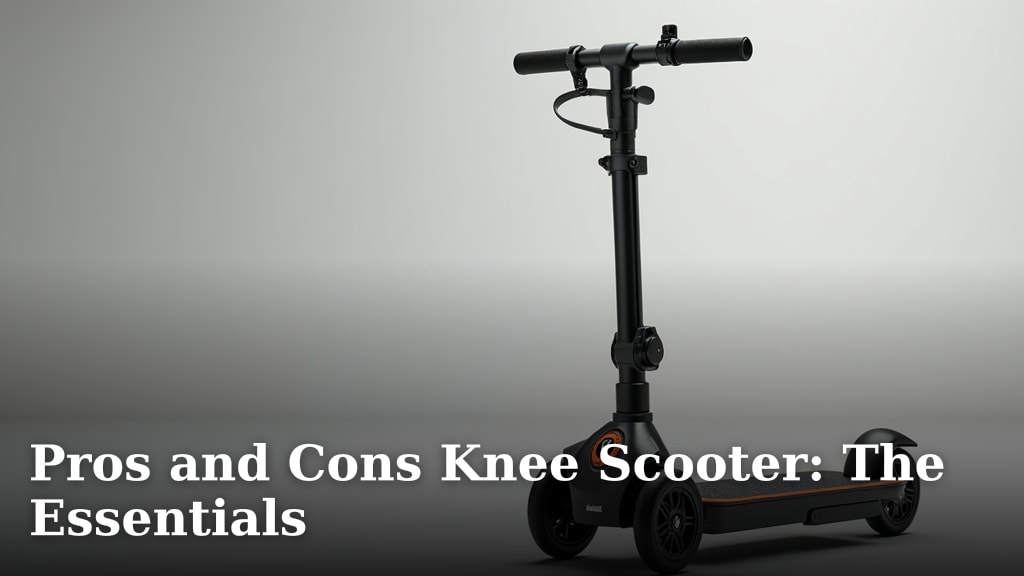
A knee scooter can be a great mobility aid after a leg injury, offering more freedom than crutches. It allows you to keep weight off your injured leg while still moving around your home or office. Many users find it a more comfortable and convenient alternative for temporary mobility challenges, especially for shorter distances.
When considering a knee scooter, it’s smart to weigh its benefits against its drawbacks. They can help you maintain a degree of independence. But like any device, there are situations where they might not be the best fit. Understanding both sides helps you make the right choice for your recovery.
- Knee scooters help you move without putting weight on an injured leg.
- They can be easier to use than crutches for many people.
- However, they aren’t always ideal for uneven terrain or stairs.
- Choosing the right one depends on your specific needs and recovery plan.
Let’s take a look at the pros and cons of using a knee scooter so you can decide if it’s the right tool for your recovery journey.
Weighing Your Options: Knee Scooter Pros and Cons
When you’re dealing with a leg injury, getting around can feel like a huge challenge. You’ve probably heard about knee scooters as a way to move without putting weight on your bad leg. They can seem like a really good option, especially compared to crutches. But is a knee scooter the right choice for *your* situation? Let’s break down the good points and the not-so-good points to help you decide. Let’s break down the good points and the not-so-good points to help you decide if a knee scooter is right for you.
The Upsides: Why a Knee Scooter Might Be Your New Best Friend
Many people find knee scooters offer a welcome sense of freedom after an injury. They let you keep moving when you might otherwise feel stuck. We found that a key benefit is improved mobility for everyday tasks.
Keeping Your Hands Free and Your Body Balanced
One of the biggest advantages is that knee scooters keep your hands free. Unlike crutches, which demand constant gripping, a scooter lets you carry things. Imagine grabbing a cup of coffee or your phone without a struggle. This makes simple tasks much easier to manage.
Research also shows that knee scooters can offer a more stable base than crutches. Your body is generally more balanced when your hands aren’t occupied with walking support. This can reduce the risk of falls, which is something everyone wants to avoid during recovery.
Comfort and Ease of Use
For many users, the padded knee support is far more comfortable than the underarm pressure from crutches. Crutches can cause chafing and soreness. A scooter distributes your weight differently, often leading to less overall discomfort.
We found that learning to use a knee scooter is usually pretty straightforward. Most people get the hang of steering and maneuvering within a short time. The adjustable handlebars and knee pads mean you can often customize it for a better fit, making it feel like it was made just for you.
Getting Around Faster and More Efficiently
When you’re on crutches, every step is a deliberate effort. Knee scooters, on the other hand, allow for a more fluid motion. You can glide from room to room with greater speed. This can be a big morale booster during a difficult recovery period.
Think about navigating your home or a short trip to the mailbox. A scooter makes these kinds of movements much less taxing. It helps you maintain a semblance of normalcy when everything else feels disrupted.
The Downsides: When a Knee Scooter Might Not Be the Best Fit
While knee scooters have a lot to offer, they aren’t perfect for every situation or every person. It’s important to be aware of their limitations so you don’t end up frustrated.
Terrain Challenges: Not for Everywhere
This is a big one: knee scooters are designed for smooth, relatively flat surfaces. Think indoor floors, paved sidewalks, or smooth office carpeting. If your recovery involves navigating gravel driveways, grassy yards, or uneven sidewalks, a scooter can be very difficult or even impossible to use.
We found that going over bumps or cracks can be jarring and unpredictable. Small obstacles can feel like huge barriers. For outdoor use on anything less than perfect pavement, you might find yourself wishing for a different mobility aid.
Stairs Are a No-Go Zone
This is a hard rule: you cannot go up or down stairs with a knee scooter. It’s simply not designed for that kind of movement. Trying to do so would be extremely dangerous. This means if your home or destination has stairs, you’ll need a different plan for those specific situations.
You might need to rely on crutches for stair navigation or have someone assist you. This can be a significant inconvenience if you live in a multi-level home or frequently visit places with stairs.
Not Always Ideal for Longer Distances or Rougher Surfaces
While great for short trips, a knee scooter might not be the most comfortable choice for covering long distances. Your non-injured leg and hip can get tired from constant pushing. Some users report discomfort or fatigue after extended use.
Also, if your injury requires you to be completely off your feet for a long time, a scooter might not provide enough rest for your injured limb. Always follow your doctor’s specific instructions regarding weight-bearing and activity levels.
Potential for Added Strain or Discomfort
Even with padding, resting your knee and shin on a scooter for extended periods can cause pressure points. Some people develop soreness in their knee, shin, or even their back. This can depend on your body type, the scooter’s design, and how long you use it.
If you have certain knee conditions, the bent position might aggravate them. It’s wise to consider your specific medical history. We found that proper adjustment and taking frequent breaks can help mitigate this, but it’s something to be aware of.
Making Your Choice: A Quick Checklist
To help you decide if a knee scooter is right for you, consider these questions:
- Will you mostly be indoors on smooth surfaces?
- Do you need to keep your hands free for carrying items?
- Are you looking for more comfort than crutches offer?
- Do you have stairs in your home or at your frequent destinations?
- Will you be traveling long distances frequently?
- Does your doctor recommend a specific type of mobility aid?
Comparing the Scooter to Other Options
It’s helpful to see how knee scooters stack up against other mobility aids.
| Feature | Knee Scooter | Crutches |
|---|---|---|
| Hands Free | Yes | No |
| Stair Navigation | No | Yes (with skill) |
| Terrain Suitability | Smooth surfaces only | More versatile, but difficult |
| Comfort (general) | Often higher, especially for upper body | Can cause underarm/hand pain |
| Stability | Generally good on smooth surfaces | Can be less stable |
| Ease of Use | Generally easy to learn | Requires practice and strength |
As you can see, each has its strengths and weaknesses. The best choice really depends on your daily routine and the environment where you’ll be using it most.
Conclusion
You’ve learned that a knee scooter can be a solid choice for regaining mobility after a leg injury. It offers freedom and convenience, especially when you need to keep your hands free. However, it’s not a one-size-fits-all solution. Remember its limitations with stairs and rough terrain.
Weigh your daily environment and your doctor’s advice carefully. If smooth surfaces and keeping your hands busy are your main needs, a scooter might be perfect. If you’re ready to make a decision, your next step is to talk to your healthcare provider about whether a knee scooter fits your specific recovery plan.
Frequently Asked Questions
Are knee scooters safe for all leg injuries?
Knee scooters are generally safe for injuries below the knee, such as ankle or foot fractures. However, you should always consult your doctor. They can confirm if a scooter is appropriate for your specific injury and recovery stage.
How long can I expect to use a knee scooter?
The duration of use varies greatly depending on your injury and healing process. Typically, people use knee scooters for several weeks to a few months. Your doctor will guide you on when it’s safe to transition back to walking.
Can I use a knee scooter outdoors on sidewalks?
Yes, you can use a knee scooter on smooth, paved sidewalks. However, very uneven surfaces, cracks, or gravel can make it difficult and potentially unsafe. Always proceed with caution and be aware of your surroundings.
What’s the main difference in comfort between a scooter and crutches?
Many users find knee scooters more comfortable because they avoid the pressure points and potential nerve issues associated with crutches under the arms. The padded knee support can be a big relief for many people.
How do I maintain balance on a knee scooter?
Maintaining balance involves keeping your core engaged and using your non-injured leg to propel yourself forward. Steering with your hands helps direct your movement. Start slowly in a safe, open area to get accustomed to the balance and control.