Are Knee Scooters Really Better Than Crutches?

For many, knee scooters offer a more comfortable and mobile way to get around after an injury than traditional crutches. While crutches can be awkward and tiring, knee scooters allow you to keep your hands free and move with greater ease. This makes them a strong contender for your recovery needs.
When you’re dealing with a foot or ankle injury, mobility is key. You want a way to travel that doesn’t drain all your energy. Knee scooters and crutches both aim to help, but research suggests knee scooters often provide a smoother, less strenuous experience. They can be especially helpful for longer distances or navigating varied surfaces.
- Knee scooters are often more comfortable than crutches.
- They keep your hands free, improving convenience.
- Mobility is generally easier and less tiring with a scooter.
- Crutches can be more challenging for daily tasks.
Let’s break down the pros and cons of each to help you decide which is right for your recovery journey.
Knee Scooters vs. Crutches: Which Mobility Aid is Best for You?
When you’re sidelined with a foot or ankle injury, getting around can feel like a puzzle. You’ve probably seen people using both crutches and knee scooters. They both help you move when you can’t bear weight on your injured leg. But are they really the same? We looked into it, and the research often points to knee scooters as the more comfortable and effective option for many.
The main goal is to keep moving safely while your body heals. Crutches have been around forever, and they work. Yet, many find them difficult to manage. Knee scooters offer a different approach. They aim to make your recovery period less of a hassle. Let’s compare them head-to-head.
Understanding the Basics: What Are They?
Before we dive into the pros and cons, let’s make sure we’re on the same page about what these mobility aids are. It helps to picture them in action.
Traditional Crutches
You know the ones: the long sticks that go under your arms. You lean on them and swing your good leg forward. They require a lot of upper body strength. You also need to balance carefully with each step. They are a well-known tool for temporary mobility issues.
Knee Scooters (or Knee Walkers)
These look more like a low bicycle. They have a platform where you rest your injured leg. Your good leg is used to push off the ground, like a scooter or a skateboard. They typically have wheels and handlebars for steering. This design keeps your hands free, which is a big difference from crutches.
Comfort and Ease of Use: A Major Factor
Let’s be honest, dealing with an injury is tough enough. Your mobility aid shouldn’t add to your misery. When we talk about comfort, knee scooters often take the lead.
The Crutch Experience: Often Uncomfortable
Crutches can be a real pain in the *underarms*. We found that prolonged use can lead to sore shoulders and wrists. The constant pressure can also cause nerve irritation. Many users report a general feeling of exhaustion from just moving around their own home. It’s a workout you don’t want during recovery.
Trying to carry things with crutches is another challenge. Imagine juggling a plate of food or a cup of coffee while balancing on two sticks. It’s often impossible. This means relying more on others for basic tasks, which can be frustrating.
The Knee Scooter Advantage: Smoother Sailing
Knee scooters offer a more relaxed way to move. Resting your injured leg on the padded platform takes the pressure off your foot, ankle, or knee. Your hands are free to steer and also to carry small bags or items. We found that users report less fatigue compared to crutches. It feels more like walking, but with a little help.
Many knee scooters have adjustable handlebars and platforms. This allows you to customize the fit for your body. A good fit means better posture and less strain. This can contribute to a more comfortable overall experience during your recovery period.
Mobility and Freedom: Getting Around
When you’re recovering, you still want to be able to get places. Whether it’s to the kitchen, the bathroom, or even a short trip to the mailbox, mobility matters. Knee scooters often provide more freedom.
Crutches: Limitations on the Move
While crutches allow you to move, they can be slow and cumbersome. Navigating stairs can be tricky and requires practice and caution. Uneven surfaces, like gravel or grass, can be difficult to manage. You might feel hesitant to go anywhere that isn’t perfectly smooth.
The need for constant grip can also be tiring. Your arms and hands might get sore from holding on. This can limit how far you’re willing to go. The overall feeling can be one of restricted movement, even when you are technically mobile.
Knee Scooters: Navigating Your World
Knee scooters, with their wheels, generally handle various indoor surfaces with ease. Many models can even manage smooth outdoor paths. You can often go at a decent pace, allowing you to move from room to room or even run quick errands with less effort. This sense of independence is important for morale during recovery.
The ability to keep your hands free is a game-changer. You can open doors, push a shopping cart (in a controlled environment, of course!), or even hold a pet’s leash. This makes daily life much more manageable. We found that many users feel they can maintain a more active lifestyle while healing.
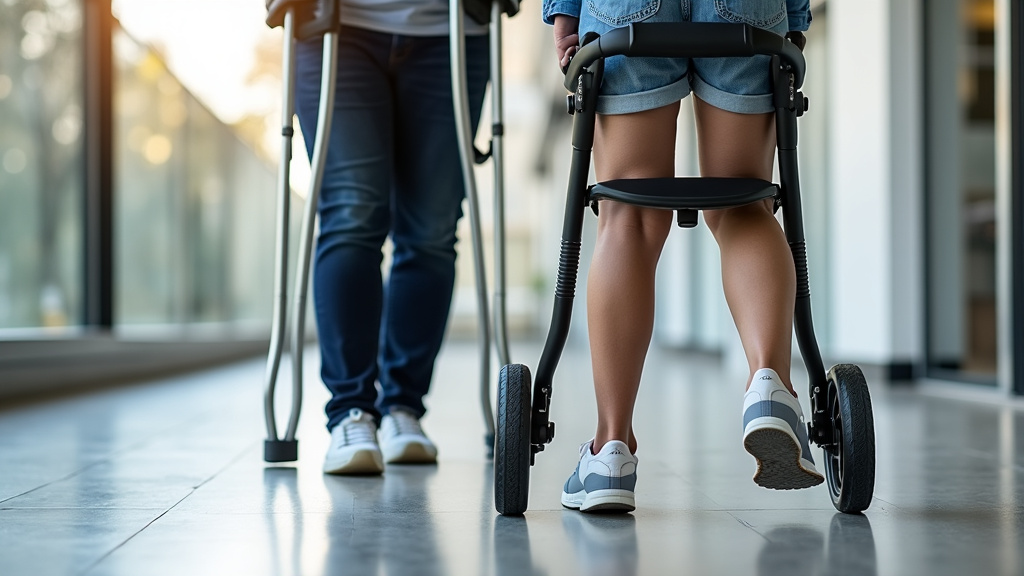
Practical Considerations: Daily Life and Tasks
Beyond just moving from point A to point B, think about how your mobility aid fits into your everyday life. What can you actually *do* while using it?
Crutches: The Balancing Act of Daily Tasks
As mentioned, carrying things with crutches is tough. Simple tasks like making a meal, doing laundry, or even just fetching your mail can become major operations. You might need to make multiple trips or rely on help more than you’d like.
Even personal care can be more challenging. Showering, for example, requires careful planning and often special equipment to manage with crutches. The constant need to use your arms and upper body can be draining throughout the day.
Knee Scooters: Keeping Life Flowing
With your hands free, many daily tasks become much more achievable on a knee scooter. You can prepare simple meals, carry items between rooms, and manage household chores more easily. This can help you feel more self-sufficient during your recovery.
Many knee scooters are also designed to be compact or foldable, making them easier to store or transport in a car. This adds to their practicality for everyday use. While navigating tight spaces might require a little maneuvering, most users find them Understanding the parts of a knee scooter can help with its use and maintenance.much more convenient than crutches for daily living.
A Quick Comparison Table
Let’s summarize the key differences to help you see which might be a better fit for your needs.
| Feature | Knee Scooters | Crutches |
|---|---|---|
| Comfort | Generally higher, less strain on arms/shoulders. | Can cause arm, wrist, and shoulder pain. |
| Ease of Use | Intuitive to operate, similar to riding a scooter. | Requires practice, balance, and upper body strength. |
| Hands Free | Yes, great for carrying items. | No, difficult to carry anything. |
| Mobility on Surfaces | Good on smooth surfaces; some handle slight inclines. | Best on smooth, level surfaces; challenging on uneven terrain. |
| Energy Expenditure | Lower, less tiring for longer distances. | Higher, can be very exhausting. |
| Stairs | Cannot use on stairs. | Can use on stairs with practice, but can be difficult and risky. |
Making Your Choice: What to Consider
So, are knee scooters really better than crutches? For many people, the answer is yes, primarily due to comfort and convenience. However, the best choice depends on your specific injury, your home environment, and your personal preferences.
Is a Knee Scooter Right for You?
Consider a knee scooter if:
- Your injury is to your foot, ankle, or lower leg.
- You need to be mobile for an extended period (weeks or months).
- You want to keep your hands free for daily tasks.
- You want to reduce strain on your arms, shoulders, and wrists.
- Your home and work environments are mostly flat and smooth.
When Crutches Might Still Be Necessary
Crutches might be a better fit if:
- You have significant balance issues unrelated to your injury.
- You need to navigate stairs frequently and cannot use a stairlift.
- Your injury makes it difficult to stabilize on a scooter platform.
- You have very limited space to maneuver.
- Your doctor specifically recommends them for your condition.
Ultimately, consulting with your doctor or physical therapist is the best way to determine which mobility aid aligns with your recovery plan. They can assess your injury and offer personalized advice. Choosing the right tool can make a significant difference in how smoothly your recovery process goes.
Conclusion
When you’re recovering from a lower leg injury, choosing the right mobility aid can make a big difference. Our look at knee scooters versus crutches shows a clear trend: knee scooters often offer superior comfort and convenience. They let you keep your hands free and reduce the strain on your upper body, making daily tasks much easier. While crutches can work, they often come with more pain and exhaustion. For most people facing a foot, ankle, or lower leg injury, a knee scooter provides a smoother path to recovery. Your best next step is to discuss these options with your doctor or physical therapist to get personalized advice for your specific situation.
Frequently Asked Questions
Can I use a knee scooter on stairs?
No, knee scooters are not designed for use on stairs. The wheels make them unstable on inclines and declines, and it’s impossible to safely position your injured leg. You will need to use crutches or find an alternative method if you must navigate stairs during your recovery.
How long can I expect to use a knee scooter?
The duration you’ll use a knee scooter depends entirely on your injury and your doctor’s recommendations. Most people use them for several weeks to a few months while their foot, ankle, or lower leg heals. Your healthcare provider will guide you on when it’s safe to transition back to regular walking.
Are knee scooters difficult to learn to use?
Most users find knee scooters quite intuitive and easy to learn. You simply place your injured leg on the padded platform and use your good leg to push off the ground, similar to riding a scooter or skateboard. Steering is done with the handlebars, and braking is usually straightforward.
Can I use a knee scooter if I have knee pain?
Knee scooters are designed for injuries below the knee, typically to the foot or ankle. If you have knee pain itself, resting your knee on the platform might be uncomfortable or even worsen your condition. It’s essential to consult your doctor to see if a knee scooter is appropriate for your specific injury and pain.
What if my injury is higher up my leg, like my shin?
Knee scooters are generally best for injuries to the foot, ankle, and lower leg. If your injury is higher up your shin, you might find it difficult to comfortably or safely support yourself on the scooter’s platform. In such cases, crutches might be a more suitable option, or you should ask your doctor for specific recommendations.